
Why Does Only One Nostril Feel Blocked When I Sleep on My Side and Why Does It Switch Sides During the Night?
Dr JK Avhad MBBS MD [Last updaed 12.12.2025]
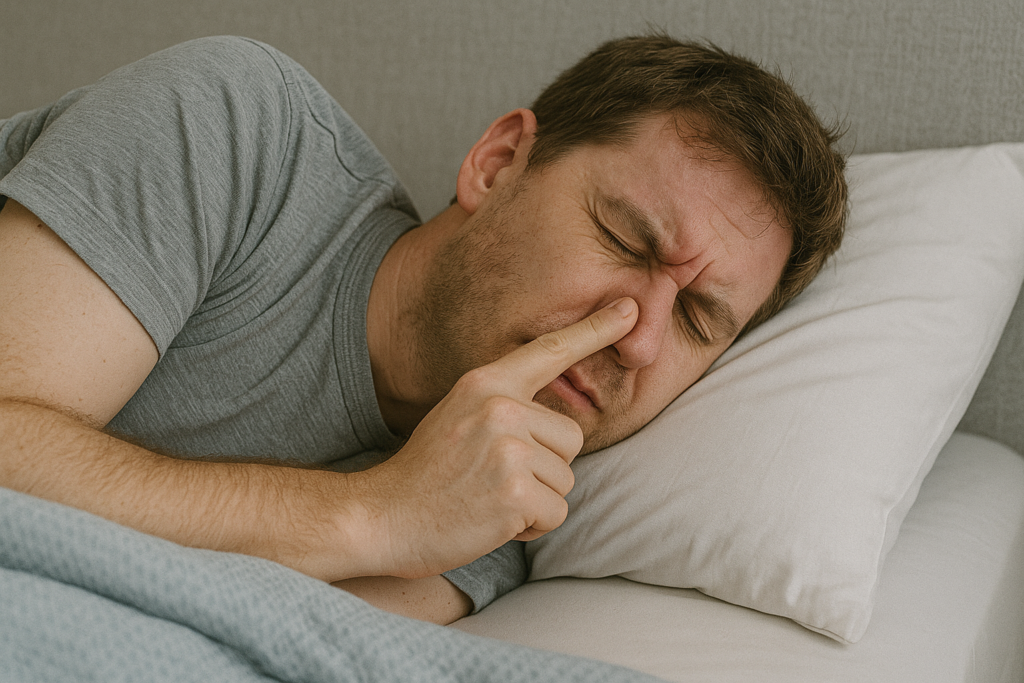
Almost everyone of us has had this experience: you lie down to sleep, turn onto your side, and
within minutes one nostril feels completely blocked. If you switch sides, the congestion often switches
too. By morning, it may feel like your nose spent the night playing musical chairs.
The short answer is that this pattern is usually normal physiology, not a serious disease. Your
nose constantly adjusts airflow between left and right in a rhythm called the nasal cycle.
Lying on one side, changes in blood flow and gravity make that cycle more obvious. Sometimes,
though, underlying problems like allergies, chronic sinusitis or a deviated septum make the
night-time blockage much worse.
The inside of each nostril is lined with tissue that can swell or shrink as blood flow changes. Over a
period of several hours, the lining on one side becomes a little more swollen while the opposite
side shrinks. Then they swap. This automatic rhythm is called the nasal cycle.
Medical reviews describe the nasal cycle as a normal, alternating change in resistance between the two nasal passages that helps the nose warm, humidify and filter air more efficiently.
In most healthy people, the cycle:
- Takes about 2–6 hours per side
- Continues all day and all night
- Is so subtle that you don’t notice it when you’re upright and active
When you lie flat, especially on one side:
- Blood flow shifts toward the lower side of the body and head.
- Veins in the lower nasal passage can swell more easily.
- The side you are lying on becomes naturally more congested, while the upper side opens.
Sleep-medicine resources point out that lying down often makes congestion worse because of changes in blood flow to the nose and sinuses.
For most people, this is uncomfortable but completely normal.
When you sleep on your right side, for example:
- Blood pools more on the right side of your nasal lining.
- The right inferior turbinate (a bony structure covered in tissue) swells slightly.
- Airflow decreases on the right, and you mainly breathe through the left nostril.
If you flip to your left, the process reverses.
It’s common for one side of the nose to feel more blocked than the other at any given time, and that side-sleeping can make this more noticeable by causing mucus to pool on the lower side.
It’s usually normal if:
- It changes sides depending on posture.
- It improves when you sit or stand up.
- You don’t have constant blockage on the same side during the day.
- You have no alarming symptoms like severe facial pain, repeated nosebleeds, or loss of smell.
In that setting, the one-nostril issue at night is most likely nasal cycle and gravity, not a major disease.
Allergies, Colds and Sinusitis
The story changes when you add inflammation.
Nasal congestion and sinusitis are extremely common in American adults:
- A CDC analysis reports 28.9 million U.S. adults—about 11.6%—have diagnosed sinusitis.
- Large surveys suggest roughly 14% of U.S. adults have been diagnosed with chronic or recurrent nasal congestion or rhinosinusitis (PMC).
- Allergic rhinitis (hay fever) affects about 7.7% of U.S. adults each year, or around 19 million people,
So if your nose feels stuffy most nights, you’re not alone.
Nasal congestion occurs when the tissues and blood vessels in the nose swell due to infections (like colds, flu or sinusitis), allergies or irritants such as smoke and pollution.
When those tissues are already swollen from:
- Seasonal allergies,
- Indoor allergens like dust mites or pet dander, or
- a viral cold or sinus infection,
Then lying on your side adds another layer of swelling. The result:
- One nostril may become completely blocked, not just mildly restricted.
- You may notice postnasal drip and cough when mucus drains backwards.
- If you already have chronic sinusitis, pressure and pain can increase.
The CDC notes that sinus infections often involve inflammation and fluid buildup in the sinus cavities, causing congestion and runny nose—symptoms that typically feel worse when lying down.
If you notice that the same nostril is blocked most of the time, not just when you lie on a particular side, then possibility of structural issues needs to be ruled out.
Deviated Nasal Septum [ DNS ]
The nasal septum is the thin wall of cartilage and bone that separates the left and right nasal cavities. When it leans or bends more to one side, it’s called a deviated septum.
Deviated septum can make one side of the nose significantly smaller and “block one side of the nose,” making breathing harder.
Most common symptoms as:
- Difficulty breathing, usually worse on one side
- Feeling of one nostril always blocked
- Nasal congestion and snoring
Nasal septal deviation is fairly common; studies from different populations have reported rates from 20–60% depending on age and diagnostic method.
If you have a deviated septum, the normal nasal cycle may still happen—but when the “narrow” side becomes the congested side, you feel nearly complete obstruction. Side-sleeping on that narrower side can be particularly uncomfortable.
Other causes of persistent one-nostril blockage include:
- Nasal polyps – soft, noncancerous growths often associated with chronic sinusitis or asthma. They can cause chronic congestion and reduced smell.
- Enlarged turbinates – overgrowth or chronic swelling of the bony structures inside the nose.
- Nasal valve collapse – weakness in the narrowest part of the nasal airway, which can cause obstruction even without obvious septal deviation.
- Post trauma – previous fractures or injuries that narrowed one side.
In these cases, one nostril may feel blocked day and night, and lying on different sides might change the sensation only slightly.
How indoor air quality affects your nose at night
WHO notes that indoor air pollution—from heating, cooking fuels, dust, mold and other sources—is a significant contributor to respiratory symptoms worldwide. (World Health Organization)
Studies of indoor air show that exposure to indoor pollutants and dampness is associated with higher rates of sinusitis, bronchitis and nasal symptoms like sneezing and congestion (PMC). In U.S. homes, several things can irritate the nasal lining at night:
- Dry air from winter heating or strong air-conditioning
- Dust mites and pet dander in bedding
- Mold in humidifiers, bathrooms or window frames
- Scented candles, aerosols, or strong cleaning products
If your nasal lining is constantly irritated, your baseline congestion rises. Then, when you lie on your side, the “gravity and nasal cycle” effect is exaggerated, and you wake up asking “why is only one nostril blocked when I sleep?”
Simple changes that evidence and expert groups often recommend include:
- Running a humidifier in winter to target about 40–50% humidity (and cleaning it regularly to avoid mold).
- Using allergy-proof mattress and pillow covers to protect against dust mites.
- Washing bedding weekly in hot water.
- Using HEPA air purifiers to reduce airborne particles in the bedroom.
- Avoiding smoking or vaping indoors; tobacco smoke is a strong nasal irritant.
By lowering the overall irritation load, you may notice that your one-nostril issue becomes less intense or less frequent.
How to adjust position and pillow height
- Elevate your head with an extra pillow or an adjustable mattress. This helps to reduce blood pooling in the nasal tissues and can ease congestion.
- If one side of your nose tends to be structurally narrower, sleeping on the opposite side may feel better.
- For some people, back-sleeping with head elevated is the most neutral position for airflow.
Self-care options include:
- Saline nasal sprays or rinses to wash away mucus, allergens and irritants before bed
- A warm shower or steam inhalation in the evening to loosen mucus.
- Short-term use of oral or nasal decongestants if your doctor says they are safe for you. (Topical decongestant sprays shouldn’t be used for more than 3–5 days to avoid rebound congestion.)
- Non-sedating antihistamines if allergies are driving the problem, as recommended by allergy guidelines.
These measures don’t change the nasal cycle, but they can lower overall swelling so the natural side-to-side shift doesn’t feel like complete obstruction.
When To Consul ENT Specialist?
While positional, switching congestion is usually benign, there are important red flags.
Consider seeing an ENT specialist if:
- One nostril is almost always blocked, even when upright.
- You have frequent sinus infections, facial pain, or thick nasal discharge lasting more than 10–14 days.
- You snore loudly, wake gasping, or feel excessively sleepy—possible signs of obstructive sleep apnea, which the CDC notes can harm heart health over time.
- You notice repeated nosebleeds, a visible deformity, or sudden loss of smell.
Your clinician may:
- Examine your nose with a light or endoscope
- Order imaging (such as CT) if chronic sinusitis or polyps are suspected
- Discuss treatments such as nasal corticosteroids, allergy management, or septoplasty if a deviated septum is severe.
FAQ’s:
Q. Why does my blocked nostril switch sides when I roll over?
Because of the nasal cycle and gravity. Blood flow increases in the lower nostril when you lie on one side, so that side swells and feels blocked; when you roll over, the other side takes over. Inflammation from allergies or a cold can make this switching much more noticeable.
Q. How can I tell if my one-sided nighttime blockage is just positional or something serious?
If congestion changes sides with your position, improves when you sit up, and you feel well otherwise, it’s more likely positional. Persistent blockage on the same side all day, especially with facial pain or recurrent infections, deserves a medical evaluation for deviated septum, polyps, or chronic sinusitis.
Q. What simple changes can I try tonight to breathe easier?
You can elevate your head, rinse your nose with saline before bed, keep the bedroom air slightly humid but not damp, and avoid strong irritants like smoke or perfume. Using a HEPA air purifier and washing bedding weekly can also reduce allergens that trigger nighttime congestion.
Q. Why does my nose feel most blocked in the early morning?
Overnight, you are lying flat for hours. Blood pools in the nasal tissues, mucus collects, and your nasal cycle keeps alternating sides. If you also have allergies, reflux, or sinusitis, inflammation adds to the swelling, so morning is often when people feel maximum stuffiness.
Q. How are sinusitis and one-nostril congestion connected?
Sinusitis—especially chronic sinusitis—causes ongoing inflammation of the sinus and nasal lining, leading to swelling and mucus buildup. This narrows airflow on both sides but may be worse on one side because of anatomy. Congestion and facial pressure are hallmark symptoms of sinus infections.
Q. What treatments are available if a deviated septum is causing my problem?
If symptoms are mild, medical therapy (nasal steroids, saline, allergy management) may be enough. For severe cases, ENT surgeons can perform septoplasty to straighten the septum.
This article is for informational purpose only and does not substitute for professional medical advise. For proper diagnosis and treatment seek the help of your healthcare provider.
References:
- American Academy of Allergy, Asthma & Immunology. (2023). Allergy statistics. Retrieved from https://www.aaaai.org/about/news/for-media/allergy-statistics AAAAI
- Centers for Disease Control and Prevention. (2018). FastStats: Sinus conditions. National Center for Health Statistics. Retrieved from https://www.cdc.gov/nchs/fastats/sinuses.htm CDC
- Centers for Disease Control and Prevention. (2024). Sinus infection (sinusitis). Retrieved from https://www.cdc.gov/sinus-infection/about/index.html CDC
- Centers for Disease Control and Prevention. (2024). Chest cold (acute bronchitis): How to feel better. Retrieved from https://www.cdc.gov/acute-bronchitis/about/index.html CDC
- Centers for Disease Control and Prevention. (2024). About sleep and heart health. Retrieved from https://www.cdc.gov/heart-disease/about/sleep-and-heart-health.html CDC
- Cleveland Clinic. (2023). Why do I sometimes get congested in one nostril? Retrieved from https://health.clevelandclinic.org/why-do-i-sometimes-get-stuffy-in-one-nostril Cleveland Clinic
- Cleveland Clinic. (2025). Deviated septum: Symptoms, causes & treatment. Retrieved from https://my.clevelandclinic.org/health/diseases/16924-deviated-septum Cleveland Clinic
- Harvey, R. J. (2024). Chief complaint: Nasal congestion. Journal of Allergy and Clinical Immunology: In Practice. JACI in Practice+1
- Mayo Clinic Staff. (2023). Nasal congestion: Definition and causes. Mayo Clinic. Retrieved from https://www.mayoclinic.org/symptoms/nasal-congestion/basics/definition/sym-20050644 Mayo Clinic+2Mayo Clinic+2
- Mayo Clinic Staff. (2024). Deviated septum: Symptoms & causes. Mayo Clinic. Retrieved from https://www.mayoclinic.org/diseases-conditions/deviated-septum/symptoms-causes/syc-20351710 Mayo Clinic
- Mayo Clinic Staff. (2023). Chronic sinusitis: Symptoms and causes. Mayo Clinic. Retrieved from https://www.mayoclinic.org/diseases-conditions/chronic-sinusitis/symptoms-causes/syc-20351661 ScienceDirect+1
- Medical News Today. (2024). Is it usual to only breathe through one nostril? Retrieved from https://www.medicalnewstoday.com/articles/why-can-i-only-breathe-through-one-nostril Medical News Today
- Nathan, R. A. (1997). The prevalence of allergic rhinitis in the United States. Journal of Allergy and Clinical Immunology, 99(6), 808–814. ScienceDirect
- National Institute on Deafness and Other Communication Disorders. (2024). NIDCD at a glance: Sinusitis. National Institutes of Health. Grants.gov+2NCBI+2
- Sleep Foundation. (2025). Treatment for a blocked nose at night. Retrieved from https://www.sleepfoundation.org/physical-health/treatment-for-blocked-nose-at-night Sleep Foundation
- World Health Organization. (2024). Household air pollution and health. Retrieved from https://www.who.int/news-room/fact-sheets/detail/household-air-pollution-and-health World Health Organization
- World Health Organization. (2024). Health impacts of air pollution. Retrieved from https://www.who.int/teams/environment-climate-change-and-health/air-quality-energy-and-health/health-impacts World Health Organization.