
Why Bedroom Airflow Affects Sinus Congestion During the Night In Americans
Dr JK Avhad MBBS MD [ Last updated 12.12.2025 ]
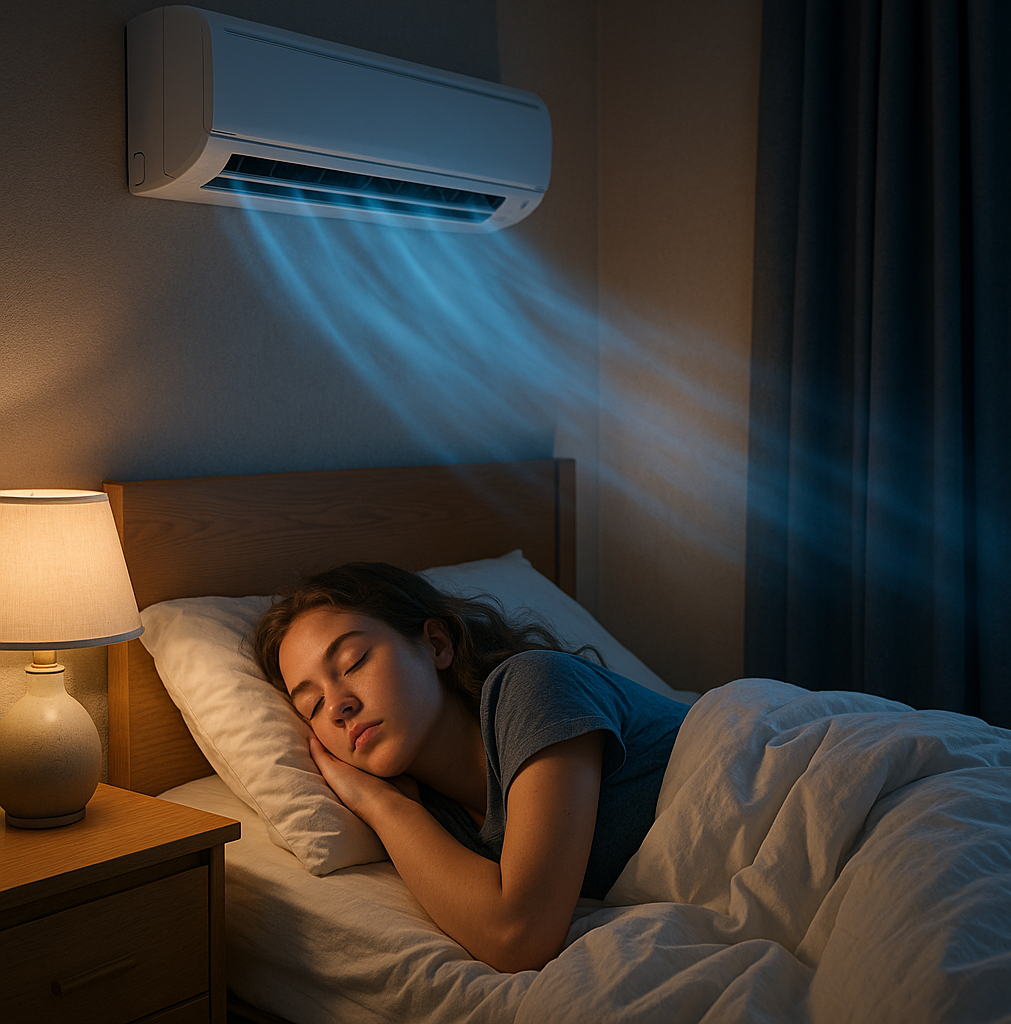
Many people in the United States go to bed breathing what feels like normal air and wake up with a blocked nose, sinus pressure, or a morning headache. Bedroom airflow is a big reason why sinus congestion gets worse at night, but it’s rarely talked about. The way air moves (or doesn’t move) around your bed affects humidity, dust mites, allergens, and how well your nose can drain while you sleep. Here, we will look at why bedroom airflow affects sinus congestion during the night, what happens when the air is too dry or too still, and how poor ventilation interacts with dust, mold, and house-dust mites. You will also see simple, evidence-based steps to improve airflow, reduce nighttime congestion, and sleep more comfortably.
If you regularly go to bed breathing fine, but wake up at 2 a.m. or at 6 a.m. thinking, “Why is my nose blocked at night only in my bedroom?” you are not alone. Nocturnal congestion is extremely common, and a lot of it comes down to how air moves around your face, bed, and room.
When I talk about bedroom airflow, I am really talking about four things working together:
- Ventilation – how much fresh air comes in and stale air goes out?
- Air movement – fans, vents, drafts, and dead corners?
- Humidity – how dry or humid the room is?
- Allergen and dust distribution – where dust mites, pet dander, and particles accumulate?
Poor airflow doesn’t cause sinus disease by itself, but it can amplify underlying problems like allergies, chronic rhinosinusitis, or a simple cold, turning mild symptoms into full nighttime blockage.
As per research work available on indoor air quality it is seen that inadequate ventilation, dry air, and indoor pollutants are linked to respiratory irritation and symptoms involving the nose and sinuses (Raju, 2020; Cleveland Clinic, 2025).
What Happens in Your Nose When You Lie Down at Night?
When you lie flat:
- Blood flow to the head increases, and nasal blood vessels can swell.
- Mucus doesn’t drain as easily with gravity.
- Small changes in airflow feel bigger because you’re not distracted.
As per sleep foundation research, lying down increases congestion and that nighttime stuffiness is often worse because of a mix of body position, allergens in the bedroom, and dry air (Sleep Foundation, 2025). Now layer bedroom airflow on top of this:
- Still, stagnant air— more buildup of carbon dioxide, humidity, and allergens
- Strong direct airflow from a vent or fan— dries out the nasal lining
- Uneven airflow–one side of your nose or one side of the bed feels much worse
It’s easy to see why “bedroom airflow and sinus congestion at night” is not just a theory but something people feel every day.
How Poor Bedroom Ventilation Makes Nighttime Sinus Congestion Worse
Let’s start with ventilation, because that’s the foundation.
The U.S. Environmental Protection Agency points out that signs of poor home ventilation include stuffy air, moisture condensation on windows, and moldy spots, all of which can signal accumulation of indoor pollutants.
In many American homes, the bedroom is the least ventilated room: door closed, windows shut for noise or safety, and HVAC vents partially blocked by furniture.
How poor bedroom ventilation impacts your sinuses
Build-up of indoor allergens
Dust mites, pet dander, and mold spores are common in bedrooms. Allergists repeatedly list bedroom allergens as a major reason allergies feel worse at night or early morning. With little fresh air, these particles stay concentrated right where you breathe.
Each breath delivers a small dose of “irritant” to your nasal lining for hours.
Increased humidity in tight rooms
If ventilation is poor and humidity runs high, house-dust mites thrive in bedding and mattresses. Multiple studies show that low air-change rates and higher indoor humidity are linked with higher levels of dust-mite allergens in mattress dust (Sundell, 1995; Harving, 1994; Arlian, 1999).
Dust mites are a major trigger of allergic rhinitis and nighttime stuffiness.
Stuffy, CO₂-rich air
When two people sleep in a closed bedroom, CO₂ levels can climb significantly overnight. A field study showed that better bedroom air quality is associated with better sleep and next-day performance (Strøm-Tejsen et al., 2016).
While CO₂ itself doesn’t directly cause sinus congestion, the overall stuffy feeling and low air exchange can worsen discomfort and perceived blockage.
That is why low bedroom ventilation results in higher allergen and moisture load which causes more sinus irritation while you sleep.
What Bedroom Airflow Patterns Make Sinus Congestion Worse?
In real homes, airflow is rarely ideal. You will often see a combination of:
- A supply vent blowing strongly over the bed
- A ceiling fan pushing air across your face
- A window that only opens on one side
- Dead corners where air barely moves
Here’s a simplified way to think about it.
Table 1. Bedroom Airflow Problems and Likely Effects on Sinuses
|
Bedroom airflow pattern |
What it does to the air |
Likely effect on your sinuses |
|
No or minimal airflow (door, windows shut) |
Stuffy, stagnant air; rising humidity and CO₂ |
Congestion, can’t breathe at night, heavy head |
|
Strong vent blowing directly on bed or face |
Local over-drying of nasal passages and throat |
Dry nose, burning sensation, rebound congestion |
|
Ceiling fan over bed on high all night |
Dries nasal lining; stirs up dust from surfaces |
Dryness, allergy flare from dust |
|
Window open near traffic or pollen sources |
Outdoor pollutants/allergens pulled into bedroom |
Nighttime allergies, sneezing, itchy nose |
|
One cold corner, one warm corner |
Uneven humidity and air movement |
One side more congested; switching sides in the night |
Many people with sinus congestion from bedroom fan or AC are reacting not just to cold air, but to drying and dust movement.
What Humidity Levels in Bedrooms Increase Sinus Problems?
Humidity is a big piece of the why bedroom airflow affects sinus congestion story.
- HVAC professionals generally recommend 30–50% relative humidity in bedrooms, with ~40–45% often cited as ideal for comfort and health. Homes and Gardens
- The Sleep Foundation notes that too low humidity dries nasal passages and can lead to irritation and congestion, especially in winter or in heavily air-conditioned rooms (Sleep Foundation, 2025).
Scientific work on dust mites and humidity adds more detail:
- House-dust mites thrive at around 70–75% RH and warm temperatures; levels of mite allergens rise as indoor humidity increases.
- Studies show a link between low air-exchange rates, higher humidity, and increased dust-mite allergen levels in bedrooms and mattresses (Sundell, 1995; Harving, 1994).
So if your bedroom:
- Feels very dry (humidity <30%), so your nose and throat can dry out and respond with reactive congestion.
- Feels damp or musty (humidity >50–60%), you’re creating a good environment for dust mites and mold, which trigger allergic congestion.
Balanced airflow and balanced humidity are what your sinuses like best.
How Indoor Air Pollution and Sinus Disease Interact at Night
Indoor air pollutants include:
- Dust, dust-mite particles, pet dander
- Mold spores from damp corners, bathrooms, or window frames
- Volatile organic compounds (VOCs) from paints, cleaners, fragrances
- Smoke from cooking, candles, or tobacco
Reviews of indoor air pollution indicates an association between poor indoor air and respiratory issues such as rhinitis, cough, and chronic sinus problems (Raju, 2020; Sacko, 2023).
Research has linked outdoor air pollution and particulate matter to chronic rhinosinusitis (CRS) and worsening of sinus symptoms (Leland et al., 2022; Zhang et al., 2021).
When bedroom airflow is poor:
- These irritants stay in the breathing zone for hours.
- You are inhaling them at the exact time when mucus clearance is slower (supine position).
- For someone with allergies or CRS, this is often enough to tip them into nightly blockage.
This is why bedroom air quality sinus congestion at night and your allergies in bed are interlinked.
How to Check Your Bedroom Airflow and Air Quality at Home
You don’t need lab equipment. A few simple observations can tell you a lot.
What simple tests can you do to check bedroom airflow?
- Tissue test near vents: Hold a tissue near supply and return vents. Does it move strongly or barely at all?
- Incense or vapor test (carefully): Briefly use incense or a visible vapor source away from smoke alarms. Watch where it travels and where it stagnates.
- Temperature difference: If one part of the room is noticeably colder or warmer, airflow is uneven.
- Morning “nose check”: Track where you sleep (which side of bed, where the vent blows) vs. which nostril feels blocked when you wake up.
What are signs your bedroom air might be a problem?
EPA and clinical sources suggest looking for:
- Condensation on windows
- Musty smells or visible mold
- Stuffy, heavy air in the morning
- Dust accumulation on fan blades, vents, or nightstands
- Worsening of nasal or sinus symptoms mainly at night
Keeping a simple symptom and room conditions diary for 1–2 weeks (humidity, windows open/closed, fan use, bedding changes) can show clear patterns.
How to Improve Bedroom Airflow Without Making Sinus Congestion Worse
Balance fresh air and allergen control
- In low-pollen, low-pollution areas, occasionally opening a window can improve ventilation.
- In high-pollen seasons or near busy roads, favor mechanical ventilation and filtration instead.
Cleveland Clinic and allergy organizations emphasize addressing both air movement and allergen sources: ventilation, filtration, and allergen reduction together (Cleveland Clinic, 2025; AAFA, n.d.).
Use fans and vents wisely
- Aim vents away from your face, not directly onto your head or nose.
- Use a ceiling fan on a lower setting to gently mix air rather than blast it.
- Clean fan blades and vent grilles regularly—otherwise you’re just recirculating dust.
Keep humidity in the sweet spot
- Use a hygrometer to monitor bedroom humidity.
- If humidity is consistently below 30%: Consider a cool-mist humidifier (and clean it regularly to prevent mold).
- If humidity is consistently above 50%: A dehumidifier can help to reduce mite and mold growth.
Reduce allergen load where you sleep
Allergy experts recommend:
- Allergen-proof covers for pillows and mattresses
- Weekly hot-water wash (≥130°F / 54°C) for bedding
- Minimizing soft, dust-collecting items near the bed (extra pillows, stuffed animals, heavy curtains)
- Keeping pets off the bed if you’re allergic
These steps don’t change airflow by themselves, but they mean that the air moving around your bed carries fewer triggers.
Table: Bedroom Airflow Problems and Simple Fixes
|
Problem you notice at night |
Likely mechanism |
Simple change to try this week |
|
Nose gets blocked when vent blows on your face |
Local drying of nasal lining |
Redirect vent, move bed, or use deflector |
|
Congestion worse with fan on high |
Dry air, dust stirred up |
Lower fan speed, clean blades, run HEPA purifier |
|
Musty smell and stuffy nose in morning |
Poor ventilation, high humidity, mold |
Open windows periodically or use dehumidifier, deep clean |
|
One nostril always blocked on the window side |
Local drafts, pollen or pollution entry |
Close that window at night; ventilate at safer times |
|
Allergies flare only in bedroom, not living room |
Higher allergen load in bedding and mattress |
Allergen covers, hot washing, improved ventilation |
When Nighttime Sinus Congestion Means You Should See a Doctor
I suggest to my patients that most of the time this issue is benign but annoying. Still, you should get evaluated if you notice:
- Persistent congestion for more than 3 months
- Facial pain or pressure, reduced smell, and thick nasal discharge
- Recurrent sinus infections
- Severe snoring, gasping at night, or feeling unrefreshed despite a full night’s sleep (possible sleep apnea)
- One-sided nasal blockage, especially if it’s new or worsening
Studies show that chronic rhinosinusitis and allergic rhinitis are often influenced by environmental exposures, including indoor air quality (Leland et al., 2022; Cavalier et al., 2025).
An ENT or allergy specialist or pulmonologist can:
- Check for structural problems (deviated septum, polyps)
- Test for allergies
- Review your home environment and give more targeted advice.
FAQ’s:
Q. Why is my nose blocked only at night in my bedroom?
Common reasons include dust mites in bedding, pet dander, mold spores, dry air from heating or AC, and poor ventilation. Lying down also increases blood flow to your nasal tissues, so any underlying irritation feels worse at night (Sleep Foundation, 2025).
If your congestion is much better in other rooms or when you sleep elsewhere, your bedroom environment is likely playing a major role.
Q. How does bedroom airflow affect sinus congestion during the night?
Airflow determines how humid, fresh, and allergen-rich the air around your nose is. Stagnant air lets dust and humidity build up; strong direct airflow from vents or fans can dry the nasal lining. Both situations can trigger or worsen sinus congestion. Balanced airflow with moderate humidity is best for your sinuses.
Q. What is the best humidity level in my bedroom for sinus comfort?
Most experts recommend keeping bedroom humidity between 30% and 50%, with around 40–45% often ideal (Homes & Gardens / HVAC guidance, 2025; Sleep Foundation, 2025).
Below that, air can feel too dry and irritate nasal passages; above that, dust mites and mold thrive and can worsen allergies.
Q. How can I improve bedroom airflow without making my allergies worse?
- Use gentle, indirect airflow (ceiling fan on low, vent not aimed at your face).
- Combine airflow changes with filtration: a HEPA air purifier and clean HVAC filters.
- Ventilate during lower-pollen times or when outdoor air quality is good.
- Reduce indoor allergens using mattress covers, hot-water washing, and clutter reduction.
Q. What should I do tonight if my nose is too congested to sleep?
Short-term steps often recommended by sleep and allergy resources include:
- Use a saline nasal spray or rinse before bed.
- Slightly elevate your head with extra pillows.
- Run a cool-mist humidifier if the air is dry, or a dehumidifier if the room feels damp.
- Keep pets off the bed and shut the bedroom door if you’re allergic.
- If symptoms persist, talk with your doctor about allergy treatment or evaluation for sinus disease.
This article is for informational purpose only and does not substitute for professional medical advise. For proper diagnosis and treatment seek the help of your healthcare provider.
References:
- American Academy of Allergy, Asthma & Immunology. (n.d.). Control indoor allergens to improve indoor air quality. Asthma & Allergy Foundation of America
- Carolina Asthma & Allergy Center. (2024, October 3). Why are my allergies worse at night and in the morning? Carolina Asthma & Allergy Center
- Cleveland Clinic. (2025, October 1). Indoor air quality: Why it matters and how to improve it. Cleveland Clinic
- Environmental Protection Agency. (n.d.). The inside story: A guide to indoor air quality. Environmental Protection Agency
- Harving, H. (1994). Occurrence of housedust mites in dwellings: Relation to bedroom air-exchange rates and humidity. Allergy. PubMed
- Leland, E. M., et al. (2022). Environmental air pollution and chronic rhinosinusitis. Frontiers in Allergy, 3, 859349. PubMed Central
- Raju, S., & Staymates, M. (2020). Indoor air pollution and respiratory health. Current Allergy and Asthma Reports, 20(11), 1–17. PubMed Central
- Sleep Foundation. (2025, July 15). Treatment for a blocked nose at night. Sleep Foundation
- Strøm-Tejsen, P., et al. (2016). The effects of bedroom air quality on sleep and next-day performance. Indoor Air, 26(5), 679–686. Wiley Online Library
- Zhang, Z., et al. (2021). Long-term exposure to particulate matter air pollution and chronic rhinosinusitis. American Journal of Respiratory and Critical Care Medicine, 204(8), 1015–1017. ATS Journals