
Rise in Heat Rashes Among Americans Due to Climate Change
Dr JK Avhad MBBS MD [ Last updated 13.12.2025 ]
Heat rashes are rapidly increasing across the United States, affecting children, adults, outdoor workers, and people living in regions experiencing extreme heat waves. As climate change fuels rising temperatures, prolonged humidity, and longer hot seasons, more Americans are reporting symptoms such as skin redness, itching, prickling, blisters, and painful inflammation. This in-depth article explains why heat rashes are becoming more common in the USA, what climate-driven environmental changes are causing these skin reactions, and how Americans can identify early symptoms of heat rash before they become severe.
We also discuss what heat rash looks like, how to prevent it during extreme heat events, and why some individuals—such as outdoor workers, athletes, children, and elderly Americans—are at higher risk. The article also explores how climate change increases humidity, raises nighttime temperatures, and amplifies heat stress on the skin, making heat rash outbreaks more frequent and intense.
For those searching for actionable solutions, the article provides evidence-based ways to prevent heat rash, including staying cool during heat waves, improving home ventilation, avoiding synthetic clothing, and using cooling skin care products. We cover practical strategies to protect sensitive individuals and discuss when medical care is necessary.
Rise in Heat Rashes Among Americans Due to Climate Change
Heat rashes—once considered minor, occasional summer time skin issues—are becoming increasingly common across the United States. Dermatologists and public health experts report a surge in cases during extreme heat events, especially in states experiencing rapid temperature increases, humidity spikes, and prolonged heat waves (CDC, 2023).
As climate change intensifies heat exposure in the USA, Americans are experiencing new patterns of skin irritation, inflammation, and sweat-duct blockage. From Arizona to Florida and even northern states like Minnesota and Washington, heat rash is emerging as a growing public health concern.
This comprehensive guide explains why heat rashes are increasing, what causes them, who is most affected, and how Americans can protect themselves as climate-related heat events become more severe.
What Is Heat Rash and What Does Heat Rash Look Like?
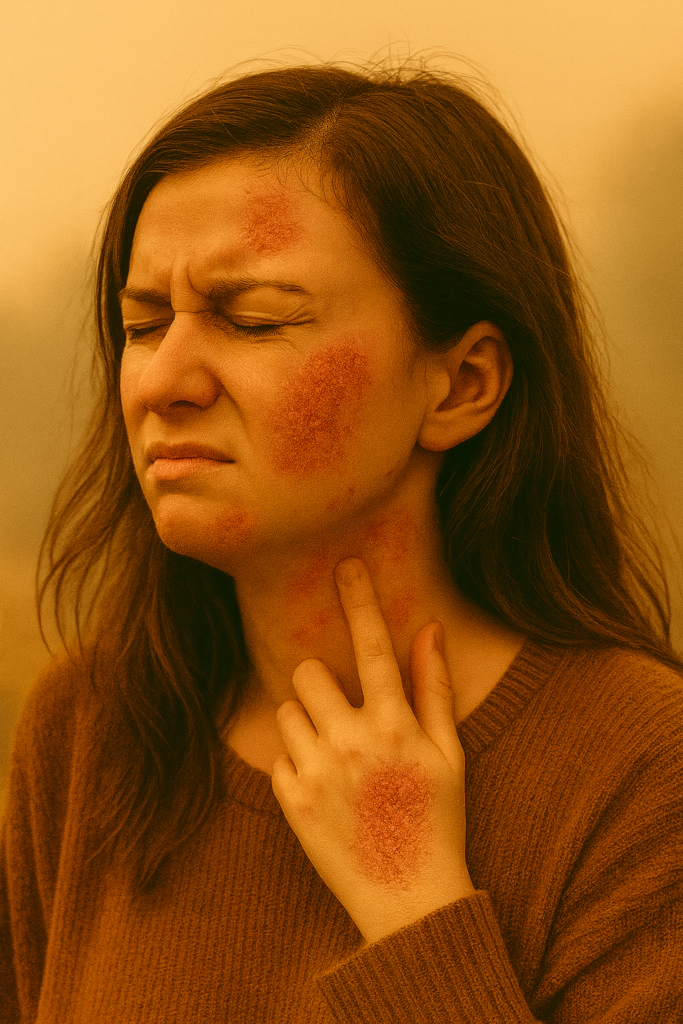
Heat rash, also known as miliaria, occurs when sweat becomes trapped under the skin due to clogged sweat ducts—typically during hot, humid weather. It appears as:
- Small red bumps
- Prickling or stinging sensation
- Itchy or irritated skin
- Tiny blisters or pustules
- Warm, inflamed patches
In many Americans, heat rash develops on the chest, back, neck, armpits, groin, elbows, or under skin folds—areas where sweat accumulates easily.
Types of Heat Rash:
- Miliaria crystallina – clear vesicles, common in children
- Miliaria rubra – red, itchy bumps (most common in adults)
- Miliaria profunda – painful, deeper lesions caused by chronic heat exposure
With climate change causing hotter summers and intensified heat waves, cases of miliaria rubra and profunda are becoming more frequent in the USA.
Why Heat Rashes Are Increasing Among Americans Due to Climate Change
Heat rash is fundamentally caused by blocked sweat ducts, but climate change amplifies every condition that triggers sweat-duct obstruction.
Below are the major climate-related factors raising heat rash rates in the United States:
Rising Temperatures and Extreme Heat waves
Climate change has increased the frequency, duration, and intensity of heat waves across the USA (NOAA, 2024).
As temperatures rise above 95–100°F, the body sweats excessively to cool itself, causing sweat ducts to become overwhelmed and clogged.
Higher Humidity Levels Across Many U.S. States
Humidity prevents sweat from evaporating efficiently. This leads to sweat accumulation and blockage.
States like Florida, Louisiana, Texas, Mississippi, and Georgia regularly experience high dew points due to climate shifts, making heat rash significantly more common.
Hotter Nights and Lack of Skin Cooling
Hot nighttime temperatures prevent the skin from cooling off.
This increases:
- Overnight sweating
- Inflammation
- Recurring heat rashes
Many Americans now experience “nighttime prickly heat,” a newly recognized issue linked to record overnight temperatures (EPA, 2024).
Urban Heat Islands in U.S. Cities
Concrete and asphalt absorb heat and radiate it back overnight.
Cities such as Phoenix, Las Vegas, Houston, and Los Angeles record temperatures 10–15°F higher than surrounding rural areas.
Urban residents—especially those without air conditioning—experience more sweat accumulation and more heat rashes.
Clothing and Lifestyle Factors Worsened by Heat
Synthetic fabrics trap heat and moisture, worsening sweat-duct blockage.
Heat rash is rising among:
- Construction workers
- Delivery drivers
- Warehouse employees
- Outdoor athletes
- Schoolchildren during recess
Wildfire Smoke and Skin Inflammation
Pollution and smoke particles aggravate skin inflammation and clog pores, making Americans more vulnerable to heat-triggered rashes (EPA, 2023).
Who Is at Risk of Heat Rash in the USA?
Certain groups face significantly higher risk because of physiological or environmental exposure:
High-risk groups include:
- Infants and children (undeveloped sweat ducts)
- Outdoor workers (construction, landscaping, agriculture, delivery)
- Elderly Americans (reduced natural cooling ability)
- People with obesity (higher skin-fold humidity)
- Athletes (excess sweating)
- People without home air conditioning
- Residents in heat wave-prone states
How Heat Rash Affects the Body and How Climate Change Worsens Symptoms
Heat rash occurs when sweat ducts are obstructed by dead skin cells, bacteria, inflammation, or excessive moisture. Climate change intensifies each of these:
Overproduction of Sweat
Higher temperatures force the body to sweat more, overwhelming ducts.
Increased Skin Friction From Damp Clothing
Moist clothes create friction, irritating the skin and worsening rashes.
Higher Levels of Bacteria on Moist Skin
Warm, humid skin promotes bacterial growth, leading to infected heat rashes or folliculitis.
Skin Barrier Damage From Chronic Heat Exposure
Prolonged sweating dries out the skin, reducing its natural protective barrier.
Reduced Evaporation Due to Humidity
Sweat lingers longer on the skin surface, creating constant irritation.
Symptoms of Climate-Driven Heat Rash in Americans
Common symptoms include:
- Tingling or prickling sensation
- Small, itchy red bumps
- Clear, fluid-filled blisters
- Burning or stinging sensation
- Skin sensitivity
- Patches of inflamed or swollen skin
- Painful lesions (in severe cases)
In extreme heat waves, Americans may experience heat rash and dehydration or heat exhaustion simultaneously.
What Americans Can Do to Prevent Heat Rash During Extreme Heat
Choose Loose, Breathable Clothing
Cotton and moisture-wicking fabrics reduce sweat buildup.
Stay Hydrated During High Heat Index Days
Hydration improves natural cooling and lowers sweat salt concentration, decreasing duct blockage.
Take Cool Showers After Sweating
Rinsing reduces bacteria and removes trapped sweat.
Use Fans or Air Conditioning
Even small cooling shifts reduce sweat volume dramatically.
Avoid Oil-Based Skin Products
They can block sweat glands and worsen miliaria.
Apply Calamine Lotion or Aloe Vera
These soothe irritation and cool the skin.
Rest in Air-Conditioned or Shaded Areas During Peak Heat (11 AM–5 PM)
Use Antibacterial Washes if Prone to Blocked Sweat Ducts
When Americans Should See a Doctor for Heat Rash
Seek medical care if:
- Rash lasts more than 3–4 days
- You develop fever
- The rash becomes painful, warm, or filled with pus
- You notice spreading redness (possible infection)
- You experience dizziness or heat exhaustion signs.
FAQs
Q. Can heat rash happen even when it’s not extremely hot?
Yes—humidity alone can trigger sweat-duct blockage.
Q. Are heat rashes contagious?
No. They are caused by blocked glands, not infections.
Q. Does climate change really increase heat rash?
Yes. Rising temperatures and humidity amplify all conditions that cause sweat duct obstruction (NOAA, 2024).
Q. Why do children get heat rash more often?
Their sweat ducts are not fully developed and clog easily.
Q. Can heat rash become dangerous?
Severe cases can cause skin infections or progress into heat-related illnesses like heat exhaustion.
Q. What is the best home remedy for heat rash?
Cool compresses, loose clothing, and calamine lotion work effectively.
Q. Does air conditioning prevent heat rash?
Yes—it reduces sweating and humidity, lowering risk significantly.
This article is for informational purpose only and does not substitute for professional medical advise. For proper diagnosis and treatment seek the help of your healthcare provider.
References:
- Centers for Disease Control and Prevention (CDC). Heat-Related Illness and Skin Conditions in the USA (2023).
- Environmental Protection Agency (EPA). Climate Change Indicators: Heat Waves and Humidity Trends (2024).
- National Oceanic and Atmospheric Administration (NOAA). Extreme Heat Events and Climate Change Trends in the United States (2024).
- American Academy of Dermatology (AAD). Heat Rash: Causes, Symptoms, and Prevention (2023).
- Harvard School of Public Health. Urban Heat Islands and Health (2023).