
What Happens to Blood Pressure When Seniors Live Within 300 Meters of Busy Roads in the United States?
Dr JK Avhad MBBS MD [Last updated 24.12.2025]
High blood pressure affects nearly two-thirds of Americans aged 65 and older, making it one of the most common—and consequential—conditions in later life. While diet, exercise, and medications receive most of the attention, where seniors live is often overlooked.
Across the United States, millions of older adults live within 300 meters (about 1,000 feet) of busy roads. For many, this proximity brings constant exposure to vehicle exhaust, ultrafine particles, and traffic noise. Over years, these exposures can subtly but persistently influence blood pressure regulation.
Living close to busy roads is increasingly recognized as a cardiovascular risk for older Americans. Seniors who reside within 300 meters of major highways or high-traffic corridors are exposed daily to traffic-related air pollution, noise, and chronic stressors that can quietly raise blood pressure over time.
Fine particulate matter (PM2.5), nitrogen dioxide, and traffic noise activate inflammatory and neurohormonal pathways that promote hypertension, arterial stiffness, and reduced nighttime blood pressure dipping.
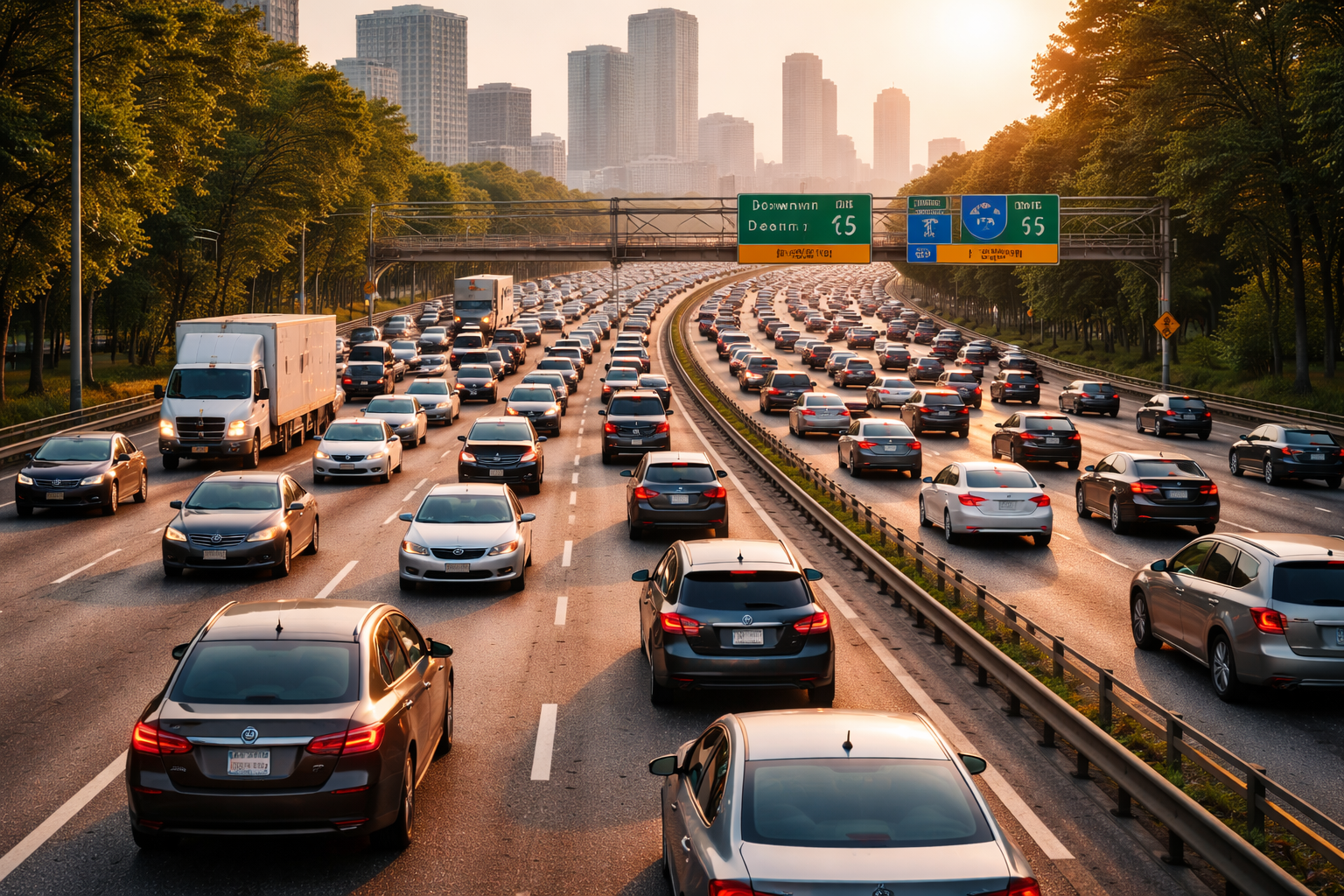
In environmental health research, living within 300 meters of a major road is considered high exposure to traffic-related pollutants.
Common U.S. Sources
- Interstates and state highways
- Freight corridors with diesel trucks
- Urban arterial roads
- Roads near ports, rail yards, and logistics hubs
Studies consistently show that pollutant concentrations drop sharply beyond 300–500 meters, making this distance a meaningful threshold for health effects.
Seniors Are More Sensitive
Age-Related Physiological Changes
As people age:
- Arteries stiffen naturally
- Baroreceptor sensitivity declines
- Kidney sodium handling changes
- Autonomic nervous system balance shifts
These changes make blood pressure more reactive to external stressors such as pollution and noise.
NIH-supported research demonstrates that older adults show stronger blood pressure responses to PM2.5 and noise exposure than younger adults (NIH, 2021).
Fine Particles (PM2.5) and Vascular Dysfunction
PM2.5 particles from traffic exhaust:
- Penetrate deep into the lungs
- Enter the bloodstream
- Trigger systemic inflammation
This leads to:
- Endothelial dysfunction
- Reduced nitric oxide availability
- Increased vascular resistance
Over time, these changes translate into higher resting blood pressure.
U.S. cohort studies show that each 10 µg/m³ increase in PM2.5 is associated with measurable increases in systolic blood pressure, particularly in adults over 60.
Nitrogen Dioxide and Oxidative Stress
Traffic-related nitrogen dioxide (NO₂):
- Promotes oxidative stress
- Increases arterial stiffness
- Amplifies inflammatory signaling
WHO guidelines emphasize that long-term NO₂ exposure is linked to cardiovascular morbidity, including hypertension (WHO, 2021).
Air pollution is only part of the story.
Chronic Noise Exposure
Traffic noise:
- Activates the sympathetic nervous system
- Increases cortisol and adrenaline
- Disrupts sleep architecture
Seniors living near busy roads often experience blunted nighttime blood pressure dipping, a pattern associated with higher stroke and heart attack risk.
Key Findings
- Seniors living within 300 meters of major roads have higher average systolic blood pressure than those living farther away
- Increased prevalence of uncontrolled hypertension, even with medication
- Stronger associations in urban and lower-income neighborhoods
Environmental exposures contribute to regional differences in hypertension prevalence across the United States (CDC, 2023).
Even moderate traffic can be harmful when homes are close to the roadway. Proximity determines:
- Concentration of ultrafine particles
- Intensity of noise exposure
- Cumulative daily dose
Seniors in apartments or homes immediately adjacent to roads receive near-continuous exposure, unlike commuters who experience brief spikes.
Beyond average blood pressure, traffic exposure influences:
- Morning blood pressure surges
- Increased variability between readings
- Poorer response to antihypertensive medications
These patterns are increasingly recognized as predictors of cardiovascular events in older adults.
High-Risk Groups
- Adults over 70
- Seniors with diabetes or kidney disease
- Those with pre-existing hypertension
- Individuals with limited access to green space
Genetic susceptibility plays a role, but environmental exposure often magnifies existing risk.
Factors That Increase Exposure
- Poor insulation
- Old windows
- Bedrooms facing the road
- Lack of air filtration
Protective Features
- Double-glazed windows
- Trees or sound barriers
- HEPA air purifiers
- Bedrooms located away from traffic
What Happens Over Time
Long-term exposure contributes to:
- Persistent hypertension
- Left ventricular hypertrophy
- Increased risk of stroke
- Higher rates of heart failure
NIH-funded studies link residential proximity to traffic with higher cardiovascular mortality in older Americans.
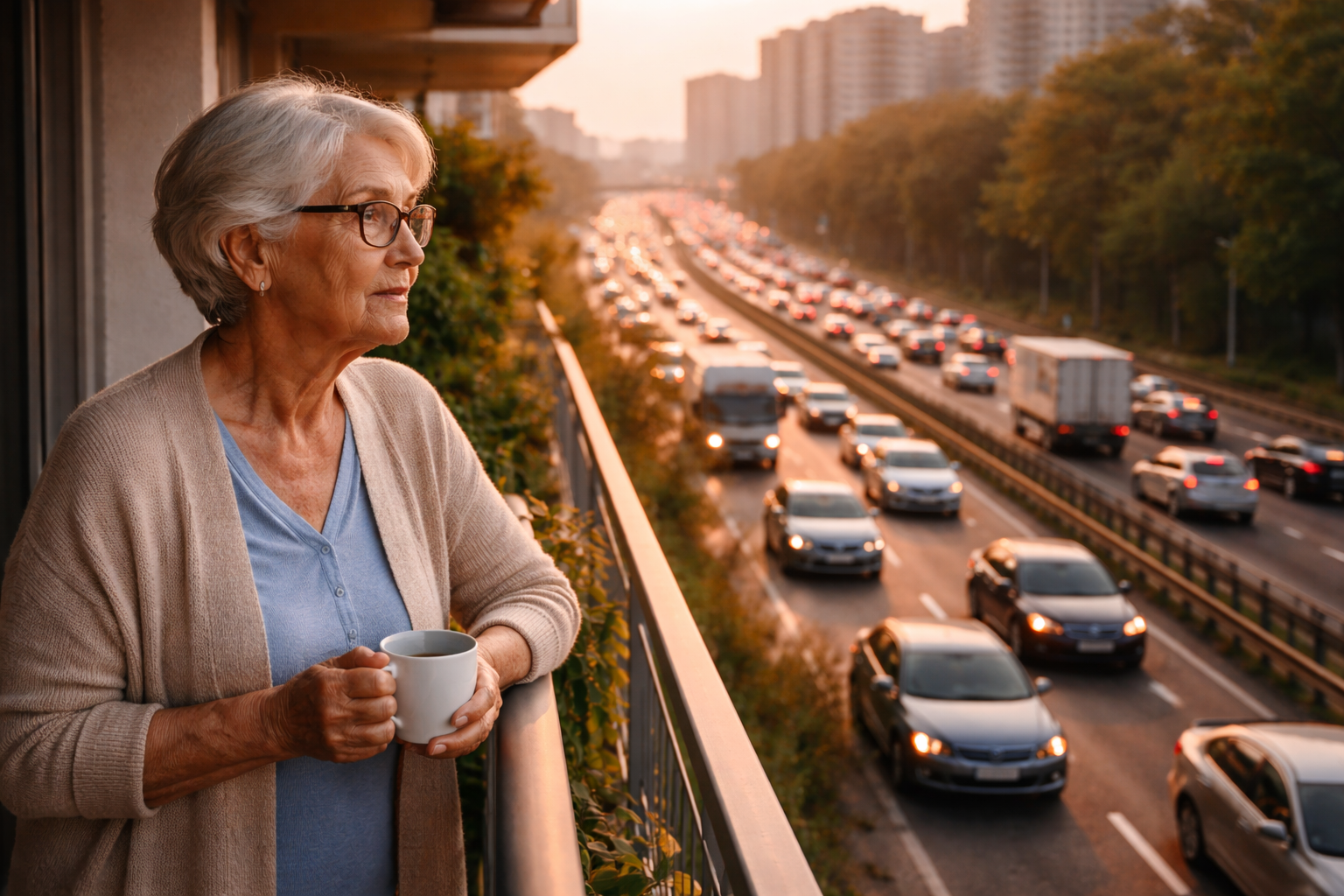
How Climate Change May Worsen the Problem
Climate change intensifies:
- Heat-related vascular stress
- Ozone formation near roadways
- Wildfire smoke compounding traffic pollution
For seniors near busy roads, these combined exposures can further destabilize blood pressure control.
How to Reduce the Risk
Personal-Level Strategies
- Use HEPA air purifiers in bedrooms
- Keep windows closed during peak traffic hours
- Monitor blood pressure at home
- Optimize medication timing
Environmental Actions
- Advocate for traffic calming measures
- Support urban green buffers
- Encourage noise-reduction infrastructure
Clinicians should:
- Ask about residential proximity to traffic
- Consider environmental exposure when hypertension is difficult to control
- Encourage indoor air quality improvements
FAQ’s:
Q. Does living near a busy road cause hypertension or just worsen it?
Evidence suggests it can both increase the risk of developing hypertension and worsen existing high blood pressure.
Q. Is 300 meters a strict cutoff?
No, but it is a commonly used threshold where exposure is consistently higher.
Q. Do air purifiers lower blood pressure?
They reduce particulate exposure and may modestly improve blood pressure control, especially overnight.
Q. Are rural seniors protected?
Not always—highways, freight routes, and agricultural traffic can expose rural homes to similar risks.
Conclusion:
For seniors in the United States, living within 300 meters of busy roads represents a meaningful, measurable risk to blood pressure control. While relocation is not always possible, awareness, targeted mitigation, and clinical recognition can reduce harm. Clean air and quiet surroundings are not luxuries for older adults—they are cardiovascular necessities.
This article is for informational purpose only and does not substitute for professional medical advise. For proper diagnosis and treatment seek the help of your healthcare provider.
Reference:
- Centers for Disease Control and Prevention. (2023). Hypertension prevalence and control.
- World Health Organization. (2021). Global air quality guidelines.
- National Institutes of Health. (2021). Air pollution and cardiovascular aging.
- Brook, R. D., et al. (2017). Air pollution and cardiovascular disease. Circulation, 136(5), 416–431.
- Gan, W. Q., et al. (2012). Long-term exposure to traffic pollution and hypertension. Hypertension, 59(2), 315–321.
- Fuks, K., et al. (2011). Traffic noise and blood pressure. Environmental Health Perspectives, 119(12), 1702–1707.
- Münzel, T., et al. (2018). Environmental stressors and hypertension. European Heart Journal, 39(47), 4020–4029.
- Pope, C. A., et al. (2015). Fine particulate air pollution and mortality. NEJM, 373, 157–168.
- Eze, I. C., et al. (2014). Residential distance to roadways and blood pressure. Environmental Health, 13, 71.
- Foraster, M., et al. (2017). Traffic noise and cardiovascular risk. International Journal of Epidemiology, 46(2), 428–440.
- Bowe, B., et al. (2019). Air pollution and cardiovascular disease. Journal of the American Heart Association.
- Adar, S. D., et al. (2016). Air pollution and vascular function. JAMA, 316(17), 1780–1789.
- Miller, M. R., et al. (2012). Inhaled particles and vascular effects. Nature, 486, 484–488.
- U.S. Environmental Protection Agency. (2022). Integrated science assessment for particulate matter.
- Franklin, B. A., et al. (2015). Air pollution and heart disease. Journal of the American College of Cardiology.
- Chen, H., et al. (2014). Living near major roads and hypertension. Environmental Research, 132, 370–377.
- Stansfeld, S. A., & Matheson, M. P. (2003). Noise pollution and health. BMJ, 327, 145–148.
- Tétreault, L. F., et al. (2013). Traffic exposure and cardiovascular health. Journal of Exposure Science & Environmental Epidemiology.
- Sørensen, M., et al. (2011). Road traffic noise and hypertension. Environmental Health Perspectives.
- Carey, I. M., et al. (2016). Traffic exposure and cardiovascular outcomes. BMJ, 352, i37.