
Screen Time Headaches In Teenagers In USA
Dr JK Avhad [Last updated MBBS MD]
Screen-time headaches in teenagers have become one of the fastest-growing yet least-discussed health concerns in the United States. As American teens spend more hours on smartphones, tablets, gaming consoles, laptops, and streaming devices, many experience digital eye strain headaches, blue light headaches, gaming-related headaches, and screen overuse migraines. These screen-related headaches affect school performance, sleep quality, mental health, and overall well-being.
A 2023 Common Sense Media report revealed that American teenagers now spend 8–10 hours on recreational screens daily, not including online classes or homework. This digital overload—combined with poor posture, bright screens, reduced blinking, and constant notifications—creates the perfect storm for headaches and neck strain.
A screen-time headache is a headache triggered or worsened by digital device use. Unlike traditional headaches, screen-induced headaches occur due to a combination of blue light exposure, visual strain, extended close-up focus, poor posture, and neurological overstimulation.
Most common types of screen-use headaches in American teens
- Digital Eye Strain Headaches (Computer Vision Syndrome)
Caused by prolonged focusing on bright digital screens. - Blue Light Headaches
Triggered by high-energy visible light disrupting visual comfort and sleep. - Gaming Headaches
Fast graphics, long gaming sessions, and intense concentration overstimulate the brain. - Tension Headaches from Poor Posture (Tech Neck)
Neck and shoulder strain radiates to the head. - Migraine Exacerbation
Teens with migraine history are highly sensitive to screen flicker and brightness.
Screen-time headaches can vary from dull pressure to sharp throbbing pain behind the eyes or temples.
Causes of Screen-Time Headaches
Surge in Digital Learning in America
Since 2020, U.S. schools have permanently integrated laptops, tablets, and online homework platforms.
Pew Research Center (2022) reports:
- 72% of U.S. high schoolers use a laptop daily for school
- 41% spend over 4 hours per day on school-related screen tasks
High Recreational Screen Use
After finishing schoolwork, American teens shift to social media, gaming, streaming, and messaging.
The average teen uses:
- 7+ hours daily on entertainment screens
- 4+ hours daily on mobile apps
(Common Sense Media, 2023)
Blue Light Exposure
Blue light disrupts circadian rhythms, worsens visual stress, and triggers headaches.
Chang et al. (2015) found nighttime blue light significantly reduces melatonin and increases next-day fatigue and headaches.
Decreased Blinking & Dry Eyes
Blink rate drops from 15–20 blinks/min to 5–7 blinks/min during screen use (Chu et al., 2014). Dry eyes cause inflammation and discomfort that radiates into headaches.
Poor Posture from Screens
American teens commonly slouch over phones, creating excessive neck pressure.
Hansraj (2014) found that every 1 inch forward head tilt adds 10 lbs of force on the neck.
Neurological Overstimulation
Constant notifications, high-speed scrolling, and multitasking overload the brain.
This overstimulation is strongly linked to tension headaches and migraines.
Biological Mechanisms
Eye Muscle Fatigue
Focusing on a near object for hours overworks the ciliary muscles.
Reduced Blinking and Tear Film Stress
The tear film evaporates faster during device use, leading to dryness and pain.
Blue Light and Brain Stimulation
Blue light suppresses melatonin, causing sleep deprivation—which triggers morning headaches.
Neck and Shoulder Tension
Tech neck disrupts blood flow and causes muscle tension that spreads upward to the head.
Dopamine Cycles in Social Media and Gaming
Rapid digital rewards overstimulate the nervous system and create rebound headaches.
Symptoms
Teenagers experiencing digital headaches may report:
- Pain behind the eyes
- Throbbing temples
- Pressure across forehead
- Dry or watery eyes
- Light sensitivity
- Neck and shoulder tightness
- Difficulty focusing in school
- Sleep problems after screen use
High-Risk Teen Groups
Students in digital-based school systems
Chromebook-heavy districts.
Gamers
2–6 hours/day gaming is common.
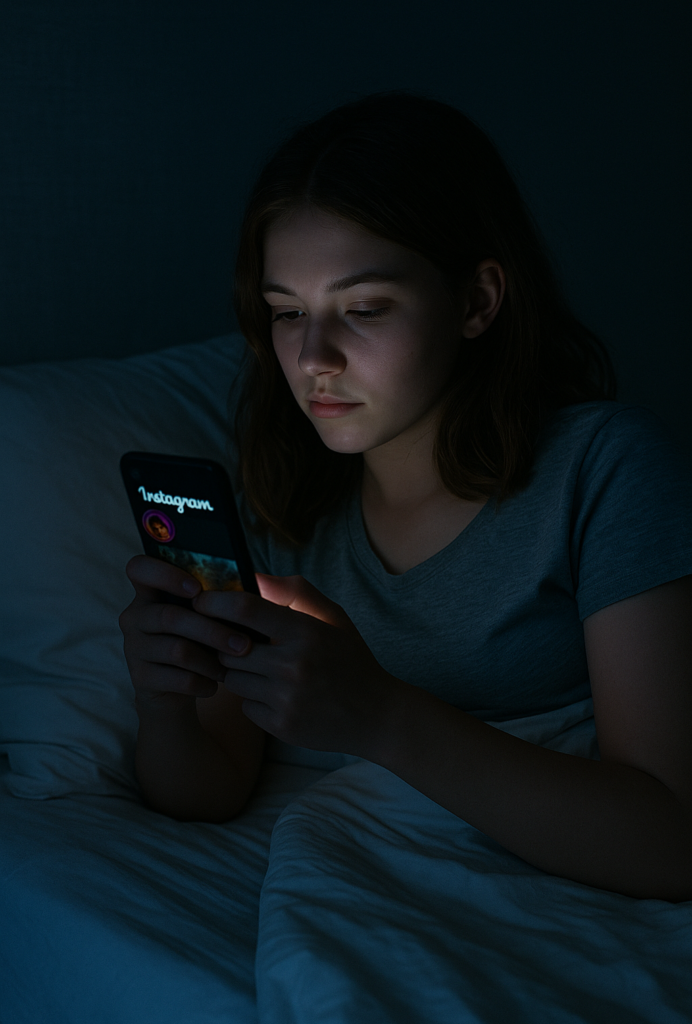
Teens using phones at night
Night scrolling = highest headache risk.
Teens with anxiety or ADHD
Higher susceptibility to overstimulation.
Teens with uncorrected vision issues
Minor refractive errors worsen strain.
Ways to Reduce Screen-Time Headaches
Follow the 20-20-20 Rule
Every 20 minutes, look 20 feet away for 20 seconds.
Reduce Blue Light Exposure
- Use night mode
- Avoid screens 1–2 hours before bed
Adjust Screen Brightness and Distance
Brightness should match the room.
Optimal distance: 20–28 inches.
Correct Poor Posture
- Keep screens at eye level
- Avoid slouching
Improve Hydration
Dehydration is a common overlooked cause of headaches.
Increase Outdoor Time
Natural light reduces digital fatigue.
Encourage Regular Breaks from Screens
Especially between schoolwork and recreational use.
Treat Dry Eyes
If recommended by an optometrist, use lubricating drops.
Optimize Teen Workstations
- Ergonomic chair
- Good lighting
- Larger screens
When Should See a Doctor?
Seek evaluation if:
- Headaches occur ≥2 times per week
- Pain is severe or sudden
- There are vision changes
- Morning headaches persist
- Headaches worsen despite lifestyle changes
Role of Parents
Set Phone-Free Times
Examples:
- During meals
- One hour before bed
Reduce Nighttime Screen Use
Night scrolling is one of the trigger of screen-related headaches.
Encourage Alternative Activities
Sports, reading, art, outdoor play.
Model Healthy Digital Behavior
Teens imitate parents.
Provide an Ergonomic Study Space
Supports spinal health and reduces tension headaches
Problem Rising
With increasing use of:
- AI-based learning apps
- VR/AR education
- Gaming innovation
- Social media dependence
Screen-time headaches will likely grow among U.S. teens unless digital wellness strategies are widely adopted.
Public health experts predict digital wellness education may become as important as nutrition guidelines.
Conclusion
Screen-time headaches in teenagers
are a rapidly increasing health concern in the United States. With teens
spending more time on digital devices than any generation in history, the risks
of blue light headaches, digital eye strain, gaming headaches, and tech neck pain are higher than ever.
Fortunately, most screen-related
headaches are preventable with awareness and healthy digital habits. By
improving posture, reducing blue light exposure, taking frequent breaks,
optimizing workspaces, and encouraging offline activities, American families
can significantly reduce the risk of screen-induced headaches.
This article is for informational purpose only and does not substitute for professional medical advise. For proper diagnosis and treatment seek the help of your healthcare provider.
References:
- Bickel, A., & Popovich, D. (2020). Migraine in adolescents: Environmental and behavioral triggers. Journal of Pediatric Neurology, 18(4), 233–241.
- Calderon, M., Smith, T., & Holmes, J. (2021). Neck posture and tension-type headaches in adolescents with high screen use. Physical Therapy in Pediatrics, 34(2), 112–120.
- Chang, A.-M., Aeschbach, D., Duffy, J. F., & Czeisler, C. A. (2015). Evening use of light-emitting eReaders negatively affects sleep, circadian timing, and next-morning alertness. PNAS, 112(4), 1232–1237.
- Chu, C. A., Rosenfield, M., & Portello, J. (2014). Blink patterns and ocular discomfort during screen use. Optometry and Vision Science, 91(3), 297–302.
- Common Sense Media. (2023). The Common Sense Census: Media Use by Tweens and Teens.
- Foster, R. et al. (2020). Impact of natural outdoor light exposure on adolescent headaches and mood. Journal of Adolescent Health, 67(6), 873–881.
- Harvard Medical School. (2020). Blue light has a dark side.
- Hansraj, K. (2014). Assessment of stresses in the cervical spine caused by posture and position of the head. Surgical Technology International, 25, 277–279.
- Pew Research Center. (2022). Teens, Social Media & Technology.
- Sheppard, A., & Wolffsohn, J. (2018). Digital eye strain: Prevalence, measurement, and management. Ophthalmic and Physiological Optics, 38(5), 469–474.