
How Does Milk Adulteration With Detergents or Neutralizers Affect Liver and Kidney Health?
Dr JK Avhad MBBS MD [Last updated 03.01.2026]
Milk is one of the most tightly regulated foods in the United States, but “food fraud” and chemical contamination still matter—especially when products come from informal supply chains, are improperly handled, or are intentionally altered to hide spoilage.
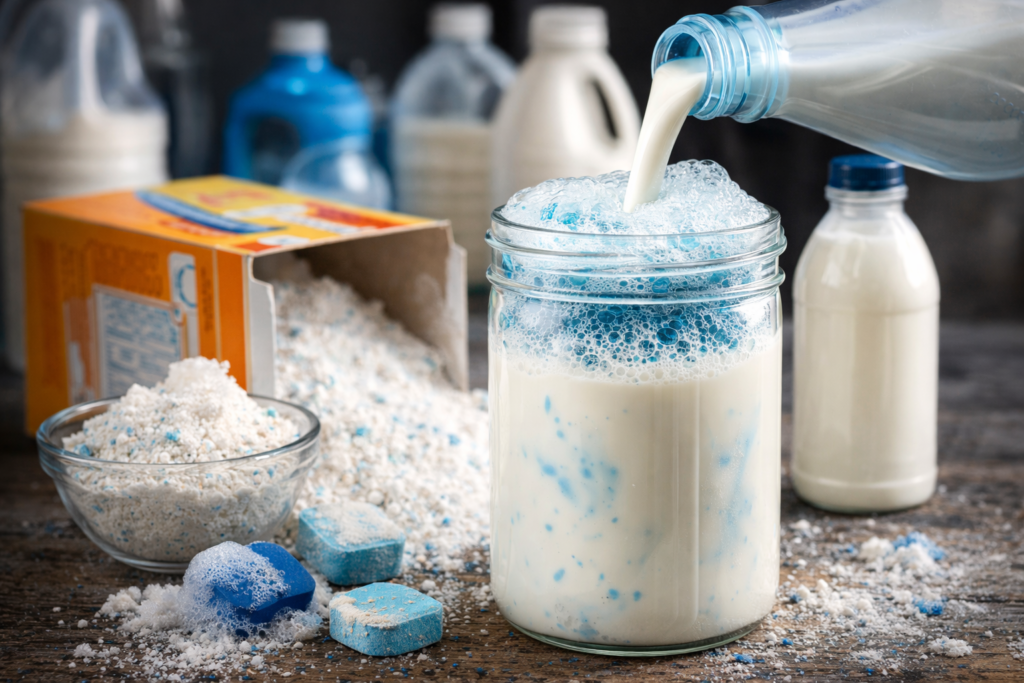
The FDA describes economically motivated adulteration (EMA) as intentionally leaving out, substituting, or adding a substance to make a food appear more valuable—a form of food fraud. In parts of the world where oversight is weaker, reports have documented milk adulteration using detergents (to mimic froth/whiteness) and neutralizers such as sodium bicarbonate or sodium carbonate (to mask sourness by raising pH).
While this is not considered common in the mainstream U.S. dairy supply, the health question is still important because these chemicals can cause acute gastrointestinal injury, dangerous acid–base and electrolyte disturbances, and in severe exposures, kidney injury and broader organ stress.
WHO notes that unsafe food—including chemical hazards—contributes to a large global illness burden, reinforcing why chemical adulteration is a public health issue, not just a “quality” issue.
Milk adulteration and detergents or neutralizers?
Milk adulteration means adding substances that should not be there—to increase volume, change appearance, or hide spoilage. The two categories in this article are:
- Detergents (surfactants): sometimes misused to create froth and a “richer” look.
- Neutralizers: alkaline chemicals that can raise milk pH to mask early souring. Neutralizers described in reviews include sodium bicarbonate, sodium carbonate, sodium hydroxide, and calcium hydroxide.
Detergents act as irritants to mucosal tissue, while neutralizers can alter the body’s acid–base balance and electrolytes—two pathways that can stress the kidneys and, indirectly, the liver.
How common is it?
For most Americans buying pasteurized milk from regulated sources, deliberate addition of detergents/neutralizers is not considered typical. The U.S. “Grade A” system and the FDA’s Pasteurized Milk Ordinance (PMO) framework are designed to control hygiene, contamination, and safe processing. (U.S. Food and Drug Administration)
But it’s still worth understanding because:
- Food fraud/EMA is a recognized problem category.
- Chemical hazards can occur via illegal practices, mishandling, or nonstandard supply chains.
- The physiology of these chemicals is the same regardless of country.
How detergents (surfactants) behave in the human body
Detergents are typically mixtures of surfactants designed to break down oils. Toxicology sources note that surfactants most commonly cause irritation (skin/eyes) and, if swallowed, can injure the gastrointestinal tract and potentially affect internal organs in severe exposures. (mmsl.cz)
Most small exposures cause mainly GI upset, but concentrated ingestions (or repeated high exposure) can be much more dangerous.
Severe poisoning can trigger dehydration, shock, rhabdomyolysis, or direct tubular injury—recognized pathways to acute kidney injury.
How neutralizers behave in the human body
Neutralizers push the system toward alkalinity. Excess bicarbonate can be absorbed and cause metabolic alkalosis and electrolyte changes; the kidneys normally excrete extra bicarbonate, but this can be impaired in dehydration or kidney disease. (NCBI)
Acid–base balance is one of the kidney’s core function. If the alkalinity load is high, the kidney has to compensate—sometimes unsuccessfully—leading to complications.
Mechanisms of kidney injury:
1) Dehydration from vomiting/diarrhea with resultant reduced kidney perfusion
Detergent exposure commonly causes nausea, vomiting, and diarrhea. When fluid loss is significant, kidney blood flow drops, increasing risk of pre-renal acute kidney injury.
2) Rhabdomyolysis and multi-organ stress in severe toxicity
Case literature describes rare but serious detergent ingestion outcomes, including acute kidney injury due to systemic toxicity and, in some reports, rhabdomyolysis.
3) Direct tubular toxicity
Although uncommon, published clinical reports discuss severe kidney outcomes after detergent poisoning, including irreversible damage in extreme cases.
Kidney is vulnerable when dehydration, tissue injury, or toxic metabolites accumulate.
Metabolic alkalosis by Neutralizers:
Neutralizer-type alkalis can cause or contribute to metabolic alkalosis, especially if intake is high or if the person is already vulnerable (kidney disease, dehydration, diuretic use).
A clinical review on baking soda (sodium bicarbonate) misuse explains that toxicity commonly presents with metabolic alkalosis and electrolyte changes, and that the kidney’s ability to excrete bicarbonate may be impaired in renal insufficiency or volume depletion. (PMC)
NCBI’s StatPearls on sodium bicarbonate similarly notes that excess oral bicarbonate absorption can result in metabolic alkalosis. (NCBI)
Potential kidney-relevant consequences include:
- Hypokalemia (low potassium), which can worsen weakness and arrhythmia risk and complicate renal handling of bicarbonate.
- Hypernatremia (high sodium) or sodium load effects in susceptible individuals.
- Worsened blood pressure/volume issues in people with CKD (kidney disease)
Neutralizers are not harmless, they can turn a GI problem into an electrolyte and kidney stability problem.
Risk groups:
Kidney risk rises when the person has:
- Chronic kidney disease or reduced kidney reserve
- Dehydration (vomiting, diarrhea, heat exposure)
- Older age
- Diuretic use
- Heart failure or uncontrolled hypertension
- Very young age (smaller body water reserve)
Effects on liver:
Detergents are not classically “liver toxins” the way some industrial solvents are. However, toxicology literature notes that severe surfactant ingestion can damage the GI lining and internal organs in serious exposures. (mmsl.cz)
Clinically, liver stress can happen indirectly through:
- Systemic inflammation and oxidative stress during poisoning
- Low blood pressure/shock states that reduce liver perfusion
- Multi-organ failure patterns seen in severe toxic ingestions
So, the liver concern is often secondary—but still important if poisoning is severe.
Neutralizers mainly act through acid–base/electrolyte disruption. Liver effects tend to be indirect (physiologic stress, dehydration, and systemic disturbance). The bigger immediate danger is usually:
- Vomiting/aspiration risk
- Metabolic alkalosis
- Electrolyte instability
Symptoms may start as “stomach upset” but evolve into systemic instability requiring urgent medical evaluation.

[Also read: Why Are Skin Irritation and Itching More Common in Americans Exposed to Urban Dust From Roads and Pavements?]
What symptoms should raise concern?
- Burning throat sensation
- Nausea and repeated vomiting
- Abdominal pain/cramping
- Diarrhea
- Unusual soapy/chemical taste (sometimes reported with chemical exposure)
Red flags suggesting significant toxicity
- Persistent vomiting, inability to keep fluids down
- Confusion, severe weakness
- Chest palpitations, muscle cramps (electrolyte disturbance clues)
- Reduced urination or very dark urine (possible dehydration/rhabdomylysis)
- Severe abdominal pain
- Trouble breathing (aspiration or airway irritation)
Kidney injury and electrolyte emergencies are time-sensitive.
What to do if you suspect milk is chemically contaminated
- Stop using the product immediately.
- If symptoms are significant or rapidly worsening, seek urgent care.
- For poisoning guidance in the U.S., call Poison Help at 1-800-222-1222 (free, confidential, 24/7).
- Save the container/receipt if safe to do so (helpful for investigation).
How to reduce risk of adulteration exposure
- Prefer milk from established, regulated brands and retailers.
- Avoid milk with unusual odor, bitter taste, excessive frothiness, or abnormal texture.
- Store milk properly (cold chain matters), because spoilage is often what fraud tries to hide.
- If buying “informal” dairy, understand the risk is higher because oversight is lower.
FDA also maintains programs to monitor chemical contaminants and protect the U.S. food supply. (U.S. Food and Drug Administration)
Why chemical adulteration is taken seriously
WHO’s food safety fact sheet estimates 600 million people fall ill annually from unsafe food worldwide, including exposures to chemical hazards.
The FDA explicitly recognizes economically motivated adulteration as a form of food fraud.
Chemical hazards can cause acute toxicity, dehydration, acid–base shifts, and organ injury—even if the event is uncommon in a regulated market.
FAQs
1) Can detergent-adulterated milk cause kidney damage?
Severe detergent exposures can—rarely—be associated with acute kidney injury, especially when dehydration, rhabdomyolysis, or systemic toxicity occurs. Case reports describe serious renal outcomes after detergent poisoning.
2) How do “neutralizers” affect kidney health?
Neutralizers like bicarbonates/carbonates can contribute to metabolic alkalosis and electrolyte disturbances. The kidneys normally excrete excess bicarbonate, but compensation can fail in renal insufficiency or dehydration.
3) Are liver effects the main concern?
Often the immediate risks are GI injury, dehydration, aspiration, and electrolyte imbalance. Liver stress is more likely secondary in severe poisoning rather than a primary target organ.
4) Is this a major U.S. risk?
Mainstream U.S. pasteurized milk is heavily regulated (PMO framework), making deliberate detergent/neutralizer adulteration less likely in typical retail channels.
5) What should I do if I think I drank chemically contaminated milk?
Stop using it and contact Poison Help (U.S.) at 1-800-222-1222 for personalized guidance, and seek urgent care for severe symptoms.
6) Which people are most vulnerable?
Children, older adults, pregnant people, and anyone with kidney disease, dehydration, or heart failure are more vulnerable to electrolyte and kidney complications.
7) Can small “trace” exposures cause chronic kidney disease?
Chronic disease risk depends on dose and duration. The strongest evidence for serious organ injury is from higher/concentrated exposures. If you suspect ongoing exposure, medical evaluation and reporting to authorities is appropriate.
8) Is there a reliable home test for detergents/neutralizers?
Consumer “home tests” are often unreliable and may encourage unsafe handling. If you suspect contamination, the safest steps are stopping use, preserving the product, and contacting poison control/health authorities.
Conclusion
Milk adulteration with detergents or neutralizers is best understood as a chemical exposure problem, not merely a “quality issue.” Detergents (surfactants) primarily irritate the gastrointestinal tract, but severe exposures can spiral into dehydration, systemic toxicity, and in rare cases acute kidney injury, as documented in clinical reports. Neutralizers such as bicarbonates/carbonates can disrupt acid–base balance and electrolytes, producing metabolic alkalosis—a state the kidneys must correct, sometimes unsuccessfully in dehydration or kidney disease. In the United States, regulated pasteurized milk systems reduce the likelihood of these adulterants entering mainstream retail supply, but food fraud is a recognized category and chemical hazards remain part of food safety worldwide. If chemical contamination is suspected, stop use and contact poison experts promptly—early guidance can prevent complications.
[Also read: How Does Indoor Pollen Accumulation Worsen Allergy Symptoms in American Homes During Peak Seasons?]
[Click here: https://healthconcise.com/how-does-indoor-pollen-accumulation-worsen-allergy-symptoms-in-american-homes-during-peak-seasons/]
This article is for informational purpose only and does not substitute for professional medical advise. For proper diagnosis and treatment seek the help of your healthcare provider.
References:
- U.S. Food and Drug Administration. (2025). Economically
Motivated Adulteration (Food Fraud). U.S. Food and Drug
Administration
- World Health Organization. (2024). Food safety (Fact
sheet). World Health
Organization
- U.S. Food and Drug Administration. (2015). Grade “A”
Pasteurized Milk Ordinance (2015 Revision). U.S. Food and Drug
Administration
- U.S. Food and Drug Administration. (2017). Inspection
guide: Dairy product manufacturers. U.S. Food and Drug
Administration
- U.S. Food and Drug Administration. (2025). Chemical
contaminants & pesticides. U.S. Food and Drug
Administration
- Centers for Disease Control and Prevention. (n.d.). Air
pollutants: particulate matter (PM10 sources include road dust). PMC
- Montgomery, H., et al. (2020). Recent food safety and
fraud issues within the dairy supply chain. Foods / PMC. PMC
- Choudhary, M., et al. (2024). Milk adulterants: Serious
impact on human health. Journal of Occupational Medicine and
Toxicology/Journal source. Lippincott Journals
- Momtaz, M., et al. (2023). Mechanisms and health
aspects of food adulteration. International Journal of Environmental
Research and Public Health (PMC). PMC
- Ionescu, A. D., et al. (2023). A review of milk frauds
and adulterations. Applied Sciences. MDPI
- Diaconu, A., et al. (2022). Metabolic alkalosis—an
adverse effect of baking soda misuse. Case report/PMC. PMC
- Senewiratne, N. L., & colleagues. (2024). Sodium
bicarbonate. StatPearls (NCBI Bookshelf). NCBI
- Fitzgibbons, L. J., et al. (1999). Severe metabolic
alkalosis due to baking soda ingestion. American Journal of Emergency
Medicine. ScienceDirect
- Razavi, B., et al. (2000). Baking soda toxicity. The
American Journal of Medicine. amjmed.com
- Riella, L. V., et al. (2009). Renal cortical necrosis complicating
laundry detergent ingestion. Clinical Kidney Journal. OUP Academic
- Park, S., et al. (2022). Acute kidney injury due to
intravenous detergent poisoning. Case report/PMC. PMC
- Misík, J., et al. (2012). Acute toxicity of surfactants
and detergent products. Medical Manuscripts / PDF. mmsl.cz
- Health Resources and Services Administration. (n.d.). Poison
Help: About the 1-800-222-1222 hotline. Poison Help
- National Library of Medicine. (2025). Poison control
center—emergency number (MedlinePlus). MedlinePlus
- U.S. Food and Drug Administration. (2017). Mitigation strategies to protect food against intentional adulteration (Food defense guidance). U.S. Food and Drug Administration