
What Are the Early Warning Symptoms of Milk Adulteration Exposure That Americans Should Not Ignore?
Dr JK Avhad MBBS MD [Last updated 04.01.2026]
Milk is one of the most trusted staples in many American homes—used in coffee, cereal, protein shakes, baking, and kids’ lunches. Because it’s so routine, people often blame sudden nausea or diarrhea on “a virus” or “something that didn’t agree with me” and move on. But in rare cases, symptoms that look like everyday food poisoning can also happen after exposure to adulterated milk—milk that has been illegally diluted or contaminated with harmful substances, or milk that becomes unsafe due to poor handling and microbial contamination.
In the U.S., strong regulation reduces the risk compared with many parts of the world, but foodborne illness still affects an estimated 48 million Americans each year—about 1 in 6 people—leading to around 128,000 hospitalizations and 3,000 deaths annually. That matters because the early warning symptoms of adulterated milk exposure often overlap with typical foodborne illness: stomach cramps, vomiting, diarrhea, fever, and dehydration.
We will discuss here early symptoms you shouldn’t ignore, how timing and symptom patterns can hint at the cause, and when to seek urgent medical care—especially for children, older adults, pregnant people, and anyone with a weakened immune system.
Most people associate “milk adulteration” with faraway scandals, but the practical reality is simpler: when milk is unsafe—whether from chemical contamination, illegal additives, or microbial growth—your body often reacts in similar ways. Your gut, nervous system, and immune system respond quickly to irritants and toxins, which is why nausea, cramping, vomiting, and diarrhea show up early and often.
Early signs
When symptoms begin very quickly (minutes to ~6 hours), it can suggest an irritant, toxin, or a fast-acting cause. Food poisoning timelines vary, but some common illnesses can start within hours.
1) Sudden nausea and vomiting after drinking milk
- What it feels like: A wave of nausea, repeated vomiting, inability to keep fluids down.
- Why it matters: Vomiting is one of the clearest early signals that your body is trying to expel a harmful exposure. It’s also a fast track to dehydration, especially in kids and older adults.
2) Burning throat, mouth irritation, or “chemical taste” sensations
- What it feels like: Burning in the mouth/throat, unusual bitter/soapy taste, throat tightness.
- Why it matters: These can appear with irritant chemical exposure, not just germs. If the taste was sharply “chemical,” don’t dismiss it.
3) Abdominal cramps that come in waves
- What it feels like: Cramping, twisting pain, bloating, urgent need for a bathroom.
- Why it matters: Abdominal cramps are a classic early sign of foodborne illness and gut irritation.
4) Watery diarrhea soon after consumption
- What it feels like: Frequent loose stools, urgency, stomach gurgling.
- Why it matters: Diarrhea is common in food poisoning, and the key danger is fluid and electrolyte loss.
Early symptoms
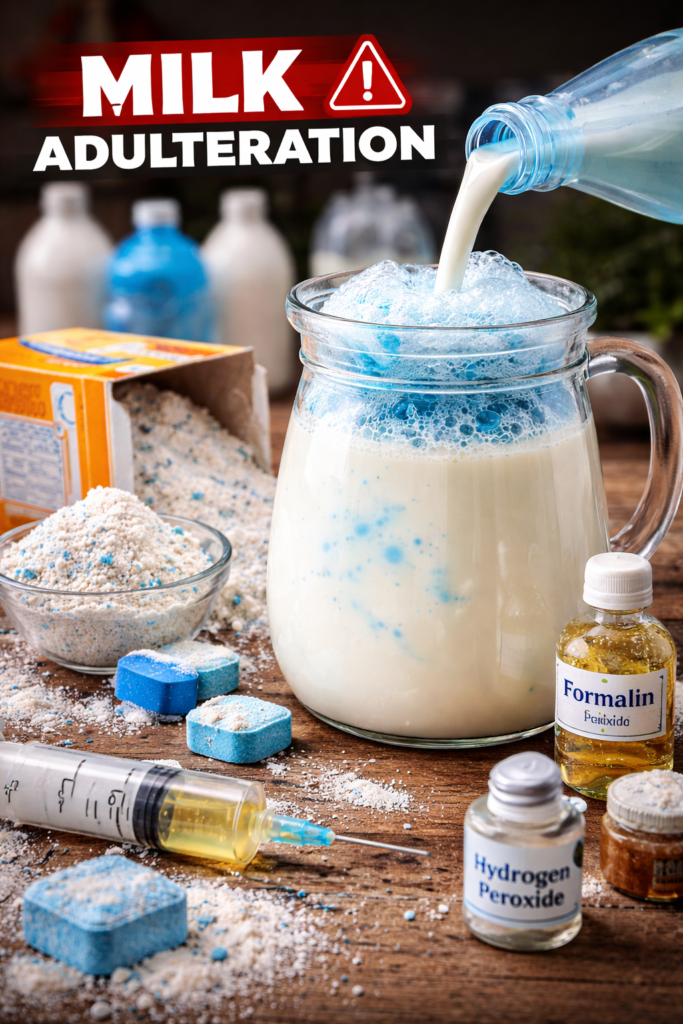
Detergents and surfactants are sometimes discussed as illicit adulterants because they can create artificial “froth” and whiteness in diluted milk. Medical descriptions in the adulteration literature link these chemicals to gastrointestinal irritation and related symptoms.
- Burning in the throat or stomach
- Nausea/vomiting that starts quickly
- Abdominal cramps and watery diarrhea
- Headache, dizziness, or weakness (often from dehydration)
- In sensitive individuals, skin irritation or rash-like symptoms after exposure (less common, but possible in irritant/allergic patterns). (PMC)
Early warning symptoms linked to formalin
Formalin is widely recognized as a toxic chemical; some adulteration discussions mention it being misused as a preservative in milk in certain contexts. Reported adverse effects described in research discussions include abdominal pain, vomiting, diarrhea, and breathing issues. (PMC)
Symptoms to treat as a red flag:
- Severe abdominal pain with repeated vomiting
- Diarrhea with fever or chills
- Burning sensation or respiratory irritation (coughing/wheezing) after ingestion in unusual cases
- Weak pulse, marked weakness, or confusion
Early signs of hydrogen peroxide
Hydrogen peroxide has legitimate industrial and sanitation uses, but ingestion can irritate the GI tract. In real-world food safety, chemicals used in processing environments can become contaminants if misused or improperly handled. The FDA emphasizes monitoring and assessing chemical contaminants in food. (U.S. Food and Drug Administration)
Possible early symptoms:
- Nausea, vomiting, abdominal discomfort
- Foamy vomiting or unusual burping/bloating (gas irritation)
- Throat irritation
Because symptoms can overlap heavily with infection, focus on severity and timing—and whether anyone else who drank the same milk is ill.
Milk adulteration vs lactose intolerance?
Many Americans have lactose intolerance or dairy sensitivity, and it can mimic “bad milk” symptoms.
More consistent with lactose intolerance:
- Bloating, gas, cramps, diarrhea
- Usually begins within a few hours of dairy
- No fever
- No severe dehydration unless prolonged
More consistent with milk contamination/adulteration:
- Fever, chills, body aches (suggests infection)
- Repeated vomiting, inability to keep fluids down
- Bloody diarrhea (medical evaluation needed)
- Multiple household members sick after the same milk
- Atypical “chemical” taste/irritation signs
Dehydration warning signs
Dehydration is the complication that turns “a miserable stomach bug” into an ER visit—especially for children and older adults. Vomiting and diarrhea can dehydrate quickly.
Mild to moderate dehydration signs
- Thirst, dry mouth
- Dizziness when standing
- Dark urine or urinating less than usual
- Dry mucous membranes and reduced skin turgor can appear as dehydration worsens.
Severe dehydration signs
- Very little or no urination
- Confusion, extreme weakness, fainting
- Rapid heartbeat
- In children: few/no tears, fewer wet diapers, lethargy.

[Also read: How Does Milk Adulteration With Detergents or Neutralizers Affect Liver and Kidney Health?]
[Click here: https://healthconcise.com/how-does-milk-adulteration-with-detergents-or-neutralizers-affect-liver-and-kidney-health/]
When should seek medical care
- Bloody diarrhea
- Diarrhea lasting more than 3 days
- Fever above 102°F
- Vomiting so often you can’t keep liquids down
- Signs of dehydration (low urine, dry mouth, dizziness on standing)
High-risk groups
The FDA emphasizes that some groups are more likely to get seriously ill from foodborne illness, including:
- Pregnant people
- Adults 65+
- Young children
- People with weakened immune systems (U.S. Food and Drug Administration)
Many food poisoning symptoms can start within hours or days depending on the cause.
Many common cases begin within 2–6 hours, but timing varies by cause.
Even though this article focuses on milk adulteration, the bigger point is risk recognition. Foodborne illness is common:
- 48 million illnesses/year in the U.S.
- 128,000 hospitalizations
- 3,000 deaths (CDC)
Globally, unsafe food is also a major burden:
- About 600 million illnesses and 420,000 deaths annually worldwide. (World Health Organization)
Immediate steps
1) Stop using the product
Don’t cook with it “to be safe.” If the concern is chemical contamination, heat doesn’t reliably solve that problem.
2) Focus on hydration first
If vomiting/diarrhea is present, small frequent sips and oral rehydration can help prevent dehydration. Dehydration is a major driver of complications in gastroenteritis.
3) Save the carton
If anyone becomes seriously ill, having the container and lot/date information can help clinicians and investigators.
4) Seek medical advice if symptoms meet “severe” criteria
Use the CDC severe symptom list as your decision tool.
Frequently Asked Questions (FAQ)
1) What are the earliest signs of milk adulteration exposure?
Most early signs are gastrointestinal: nausea, vomiting, stomach cramps, diarrhea, sometimes fever, and signs of dehydration.
2) Can adulterated milk cause symptoms without fever?
Yes. Fever often suggests infection, but chemical irritation or intolerance patterns may not include fever. The key is severity, repeated vomiting, and dehydration risk.
3) How do I know if it’s lactose intolerance instead of contaminated milk?
Lactose intolerance usually causes bloating, gas, cramps, diarrhea, but typically no high fever, no bloody stool, and less severe vomiting. If multiple people get sick from the same milk, contamination becomes more likely.
4) When should I go to the ER?
Go urgently for bloody diarrhea, fever >102°F, vomiting that prevents hydration, diarrhea >3 days, or dehydration signs like dizziness on standing or very little urination.
5) Are some Americans at higher risk from contaminated or adulterated milk?
Yes—pregnant people, older adults, young children, and immunocompromised individuals are at higher risk for severe outcomes from foodborne illness.
6) What should I do with the suspected milk?
Stop using it, keep the packaging/lot info, and seek medical guidance if symptoms are significant. If severe symptoms occur, clinicians may involve public health reporting pathways.
Conclusion
Early warning symptoms of milk adulteration exposure are easy to dismiss because they often look like routine food poisoning—nausea, vomiting, diarrhea, stomach cramps, and sometimes fever. But what separates a mild stomach upset from a dangerous situation is severity, timing, and dehydration risk. In the U.S., foodborne illness remains common—affecting tens of millions annually—so recognizing red flags matters.
If you suspect contaminated or adulterated milk, stop using the product and prioritize hydration. Seek urgent medical care for bloody diarrhea, high fever (over 102°F), vomiting that prevents fluids, diarrhea lasting more than three days, or dehydration signs such as dizziness when standing or very little urination.
[Also read: How Does Indoor Pollen Accumulation Worsen Allergy Symptoms in American Homes During Peak Seasons?]
[Click here: https://healthconcise.com/how-does-indoor-pollen-accumulation-worsen-allergy-symptoms-in-american-homes-during-peak-seasons/]
This article is for informational purpose only and does not substitute for professional medical advise. For proper diagnosis and treatment seek the help of your healthcare provider.
References:
- Centers for Disease Control and Prevention. (2025, November 24). Food safety basics. CDC
- Centers for Disease Control and Prevention. (2025, November 24). Facts about food poisoning (foodborne illness): Facts & stats. CDC
- Centers for Disease Control and Prevention. (2025, November 24). Food poisoning symptoms. CDC
- Centers for Disease Control and Prevention. (2003). Managing acute gastroenteritis among children: Oral rehydration, maintenance, and nutritional therapy. MMWR Recommendations and Reports. CDC
- Centers for Disease Control and Prevention. (n.d.). The management of acute diarrhea in children: Oral rehydration solutions. MMWR. CDC
- U.S. National Library of Medicine. (2023, December 31). Food poisoning: MedlinePlus Medical Encyclopedia. MedlinePlus
- National Institute of Diabetes and Digestive and Kidney Diseases. (n.d.). Food poisoning: Symptoms & causes. NIDDK
- National Institute of Diabetes and Digestive and Kidney Diseases. (n.d.). Viral gastroenteritis (“stomach flu”): Symptoms & causes. NIDDK
- World Health Organization. (2024, October 4). Food safety: Fact sheet. World Health Organization
- World Health Organization. (n.d.). Estimating the burden of foodborne diseases. World Health Organization
- Havelaar, A. H., et al. (2015). World Health Organization global estimates and regional comparisons of the burden of foodborne disease in 2010. PLOS Medicine. PMC
- U.S. Food and Drug Administration. (2025, January 16). People at risk of foodborne illness. U.S. Food and Drug Administration
- U.S. Food and Drug Administration. (2025, June 13). Chemical contaminants & pesticides. U.S. Food and Drug Administration
- Mayo Clinic. (2025, August 16). Food poisoning (foodborne illness): Symptoms and causes. Mayo Clinic
- Momtaz, M., et al. (2023). Mechanisms and health aspects of food adulteration. Foods (via PubMed Central). PMC
- Choudhary, M. (2024). Milk adulterants: Serious impact on human health. Journal of Occupational Medicine and Toxicology / LWW. Lippincott Journals
- Nawaz, T., et al. (2022). Physicochemical and adulteration study of fresh milk (discussion of formalin-related adverse effects). [Article] (via PubMed Central). PMC
- Patil, G. B., et al. (2024). Milk adulteration: From detection to health impact. [Review article] (ScienceDirect abstract). ScienceDirect
- Handford, C. E., Campbell, K., & Elliott, C. T. (2016). Impacts of milk fraud on food safety and nutrition with special emphasis on developing countries. Comprehensive Reviews in Food Science and Food Safety. PubMed
- Haji, A., et al. (2023). Selected food items adulteration and impacts on public health. [Article] (via PubMed Central). PMC
- Anagaw, Y. K. (2024). Food adulteration: Causes, risks, and detection techniques. [Article] (via PubMed Central). PMC
- U.S. Department of Health & Human Services. (2025, August 14). Bacteria and viruses that cause food poisoning. FoodSafety.gov. FoodSafety.gov