
Chemical Ripening of Fruits and Its Long-Term Adverse Effects on Human Health
Dr JK Avhad MBBS MD [Last updated 06.01.2026]
Fruits are universally promoted as symbols of health—rich in vitamins, fiber, antioxidants, and protective phytochemicals. Public health agencies consistently recommend regular fruit consumption to reduce the risk of heart disease, diabetes, cancer, and obesity. However, an often-overlooked reality is that not all fruits reaching consumers are naturally ripened. Across many parts of the world, including supply chains that ultimately affect consumers in developed countries, fruits are frequently artificially ripened using chemical agents to meet market demand, improve appearance, and reduce spoilage during transport.
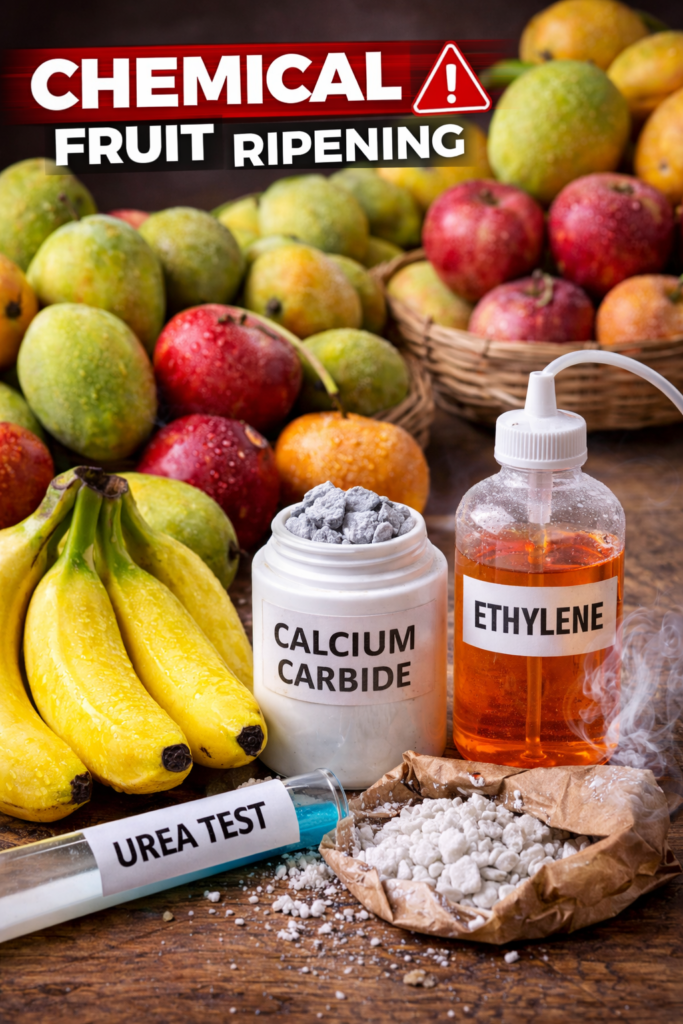
Chemical ripening refers to the artificial induction of fruit ripening using external chemical agents instead of allowing fruits to ripen naturally on the plant. Ripening is a complex biological process involving enzymatic changes, sugar accumulation, softening, aroma development, and color change—normally regulated by the plant hormone ethylene.
When chemicals are used to accelerate this process artificially, fruits may appear ripe externally but remain biochemically immature internally, resulting in altered nutritional quality and potential toxicity.
Long-term exposure to such low-dose toxins may lead to cumulative organ damage.
Chemical fruit ripening is primarily driven by economic pressure: farmers, traders, and distributors aim to deliver uniformly colored, visually appealing fruits quickly and cheaply. While some ripening agents mimic natural plant hormones, others are industrial chemicals with known toxic properties. Repeated exposure to chemically ripened fruits—especially when consumed daily over many years—raises legitimate concerns about long-term health effects.
[Also read: Urea Adulteration of Milk and its Adverse Health Effects]
[Click here: https://healthconcise.com/urea-adulteration-of-milk-and-its-adverse-health-effects/]
Factors contributing
Several economic and logistical factors drive chemical ripening:
- Long-distance transportation of fruits
- Demand for year-round availability
- Pressure for uniform color and appearance
- Reduced post-harvest losses
- Faster turnover in wholesale markets
While these factors improve affordability and availability, they often come at the cost of food safety and nutritional integrity.
Common Chemicals Used
1. Calcium carbide (CaC₂)
Calcium carbide is one of the most notorious chemical ripening agents.
When calcium carbide comes into contact with moisture, it releases acetylene gas, which mimics ethylene and induces ripening.
Industrial-grade calcium carbide often contains impurities such as:
- Arsenic
- Phosphorus hydride
These contaminants are highly toxic.
Calcium carbide is banned for fruit ripening in many countries, yet it continues to be used illegally.
2. Ethephon
Ethephon breaks down to release ethylene after application.
- Excessive residue on fruits
- Potential endocrine disruption with chronic exposure
- Gastrointestinal and neurological effects at higher doses
While regulated use may be permitted, misuse and overdosing are common problems.
3. Ethylene gas
Ethylene is a natural plant hormone and, when used under controlled conditions, is considered safer than other chemical agents.
However:
- Poorly regulated application
- High concentrations
- Lack of proper withdrawal periods
can still compromise fruit quality and safety.
4. Artificial dyes and surface treatments
Some traders combine chemical ripening with:
- Artificial coloring
- Wax coatings
- Surface enhancers
These practices further increase chemical exposure.
Chemically Ripened Fruits Vs Naturally Ripened Fruits
Nutritional differences
Chemically ripened fruits often show:
- Lower vitamin C content
- Reduced antioxidant levels
- Poor sugar–acid balance
Natural ripening allows enzymes to fully convert starch into sugars and develop protective phytochemicals.
Taste and digestibility
Artificially ripened fruits:
- Taste bland or overly sweet
- Spoil faster after purchase
- Are harder to digest for some individuals
This is due to incomplete biochemical maturation.
Short-Term Health Effects
Short-term effects may occur within hours or days of consumption, especially in sensitive individuals.
Common acute symptoms:
- Abdominal pain
- Nausea and vomiting
- Diarrhea
- Headache
- Mouth and throat irritation
Long-Term Adverse Effects
1. Chronic gastrointestinal disorders
Repeated consumption of chemically ripened fruits may lead to:
- Chronic gastritis
- Acid reflux
- Irritable bowel symptoms
Chemical residues irritate the gastrointestinal lining and disrupt gut microbiota.
2. Liver toxicity and metabolic stress
The liver is the primary detoxification organ. Chronic low-dose exposure to ripening chemicals may:
- Increase liver enzyme levels
- Promote fatty liver disease
- Increase oxidative stress
3. Kidney damage and impaired filtration
Toxic impurities such as arsenic can:
- Accumulate in renal tissue
- Reduce kidney filtration capacity
- Accelerate progression of chronic kidney disease
4. Neurological effects and cognitive impact
Long-term exposure to acetylene and arsenic impurities has been associated with:
- Headaches
- Memory problems
- Reduced concentration
- Peripheral neuropathy in severe cases
Children are particularly vulnerable due to developing nervous systems.
5. Hormonal and endocrine disruption
Some ripening agents and residues may interfere with:
- Thyroid function
- Insulin sensitivity
- Reproductive hormones
Endocrine disruption often develops silently over years.
6. Increased cancer risk
Chronic exposure to arsenic and other contaminants is linked to:
- Gastrointestinal cancers
- Liver cancer
- Skin and bladder cancers
The WHO classifies arsenic exposure through food and water as a known carcinogenic risk.
Effects on Children, Pregnant Individuals, and Elderly Adults
Children
- Higher intake per body weight
- Developing organs
- Increased susceptibility to neurotoxicity
Pregnant individuals
- Potential fetal exposure
- Increased oxidative stress
- Possible effects on fetal growth
Elderly adults
- Reduced detoxification capacity
- Higher risk of chronic disease exacerbation
The WHO and food safety authorities emphasize:
- Reducing chemical food contamination
- Strengthening enforcement
- Educating consumers
Despite regulations, weak enforcement and economic pressure allow unsafe practices to persist.
How to Identify Such fruits
While laboratory testing is definitive, consumers can look for warning signs:
- Uniform bright color with no natural variation
- Lack of aroma despite bright appearance
- Hard texture with surface softness
- Short shelf life after purchase
- Bitter or metallic aftertaste
What to do
1. Prefer seasonal and locally sourced fruits
2. Avoid overly shiny or unnaturally colored fruits
3. Wash fruits thoroughly and peel when appropriate
4. Diversify fruit intake rather than relying on one type
5. Support vendors who practice ethical ripening
Regulatory and Policy Challenges
Key challenges include:
- Fragmented supply chains
- Limited testing capacity
- Informal markets
- Cross-border trade
Awareness and Education
Reducing long-term health risks requires:
- Consumer education
- Farmer training
- Strict penalties for illegal ripening
- Transparent labeling
Conclusion
Chemical ripening of fruits is a widespread but underrecognized food safety issue with significant long-term health implications. While artificial ripening improves availability and appearance, it often compromises nutritional quality and exposes consumers to toxic residues. Chronic consumption of chemically ripened fruits has been associated with gastrointestinal disorders, liver and kidney damage, neurological effects, hormonal imbalance, and increased cancer risk over time.
Children, pregnant women, and older adults are particularly vulnerable due to higher sensitivity and reduced detoxification capacity. From a public health standpoint, minimizing chemical exposure through food is a critical preventive strategy. Choosing seasonal fruits, supporting ethical supply chains, and strengthening regulatory enforcement can significantly reduce long-term harm. Safe fruit consumption should enhance health—not silently undermine it.
[Also read: Cooking Oil Adulteration and Health Effects: A Detailed Public Health Guide]
[Click here: https://healthconcise.com/cooking-oil-adulteration-and-health-effects-a-detailed-public-health-guide/]
This article is for informational purpose only and does not substitute for professional medical advise. For proper diagnosis and treatment seek the help of your healthcare provider.
References:
- World Health Organization. (2023). Food safety and
chemical contaminants.
- World Health Organization. (2022). Arsenic and arsenic
compounds.
- Centers for Disease Control and Prevention. (2024). Foodborne
chemical exposures.
- National Institutes of Health. (2023). Dietary
toxins and chronic disease.
- FAO & WHO. (2019). Food fraud and public health
risks.
- Kader, A. A. (2002). Postharvest biology and technology
of fruits. Horticultural Reviews.
- Sahu, J. K., et al. (2013). Artificial ripening agents
and health hazards. Journal of Food Science.
- EFSA Panel on Contaminants. (2012). Chemical
contaminants in food.
- Landrigan, P. J., et al. (2018). Pollution and global
health. The Lancet.