
Harmful Effects of Food Additives and Colorants on Human Body
Dr JK Avhad MBBS MD [Last updated 08.01.2026]
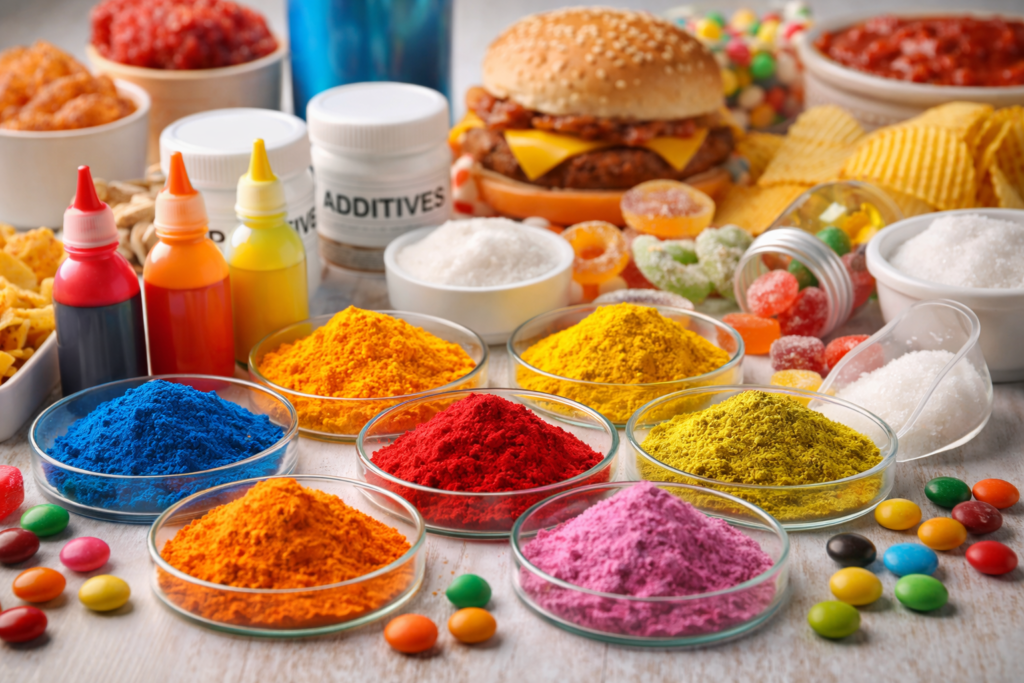
Modern food systems rely heavily on food additives and colorants to enhance appearance, extend shelf life, stabilize texture, intensify flavor, and ensure large-scale distribution.
From brightly colored candies and beverages to packaged snacks, sauces, bakery products, and ready-to-eat meals, additives have become an inseparable part of daily diets across the world.
In the United States and many other countries, regulatory authorities approve hundreds of additives as “safe” when used within specified limits.
However, safety evaluations often focus on short-term toxicity or individual compounds in isolation, while real-world consumption involves chronic, lifelong exposure to multiple additives simultaneously, beginning in early childhood.
Growing scientific evidence suggests that certain food additives and synthetic colorants may contribute to adverse health outcomes, particularly when consumed frequently or in large amounts. Reported effects range from allergic reactions and gastrointestinal disturbances to behavioral changes in children, metabolic disorders, endocrine disruption, and potential carcinogenic risks. Vulnerable populations—including infants, children, pregnant women, and individuals with asthma or food sensitivities—may be disproportionately affected.
Food additives are substances intentionally added to food to perform specific technological functions. They include preservatives, antioxidants, emulsifiers, stabilizers, flavor enhancers, sweeteners, and colorants. Colorants may be natural (derived from plants, minerals, or insects) or synthetic (chemically manufactured).
Regulatory agencies such as the Food and Drug Administration and the European Food Safety Authority approve additives after toxicological testing. International guidance is also provided by the World Health Organization and the Food and Agriculture Organization through expert committees.
Despite regulation, approval does not necessarily mean zero risk. Many additives were approved decades ago using older testing standards, and cumulative or synergistic effects were not fully considered.
Preservatives and their health implications
Sulfites
Sulfites are used to prevent browning and microbial growth in dried fruits, wine, and processed foods. While generally safe for most people, sulfites can trigger asthma attacks, wheezing, chest tightness, and anaphylactoid reactions in sensitive individuals. Studies show that sulfite sensitivity is more common among asthmatics, making inhalation and ingestion a serious concern for this group.
Nitrites and nitrates
Nitrites and nitrates are widely used in processed meats to prevent bacterial growth and enhance color. In the human body, nitrites can form N-nitroso compounds, many of which are carcinogenic. Epidemiological studies associate high consumption of processed meats with increased risk of colorectal and gastric cancers. Additionally, excessive nitrate intake may interfere with oxygen transport in infants, leading to methemoglobinemia.
Benzoates
Sodium benzoate and related compounds are common preservatives in soft drinks and acidic foods. In certain conditions, benzoates can react with ascorbic acid (vitamin C) to form benzene, a known carcinogen. Although levels are typically low, chronic exposure raises concern, especially in children who frequently consume sweetened beverages.
Artificial sweeteners
Artificial sweeteners such as aspartame, sucralose, and saccharin were developed to reduce caloric intake. However, emerging evidence suggests they may have unintended metabolic consequences.
Some studies indicate that artificial sweeteners alter the gut microbiota, leading to impaired glucose tolerance and insulin resistance. Aspartame metabolism releases phenylalanine and methanol, which may cause headaches, dizziness, or mood changes in susceptible individuals. While regulatory agencies maintain these sweeteners are safe within acceptable daily intake limits, controversy persists regarding long-term consumption.
Emulsifiers and stabilizers
Emulsifiers such as carboxymethylcellulose and polysorbate-80 improve texture and shelf stability. Animal studies demonstrate that these compounds can disrupt the intestinal mucus layer, promote low-grade inflammation, and contribute to metabolic syndrome. Human observational studies increasingly link high intake of ultra-processed foods rich in emulsifiers with inflammatory bowel disease, obesity, and type 2 diabetes.
Synthetic colorants
Synthetic colorants are among the most controversial additives due to their widespread use in foods marketed to children.
Behavioral effects in children
Several controlled trials and population studies report associations between artificial food colorants and hyperactivity, inattention, and behavioral changes in children. A landmark randomized study found that mixtures of artificial colors and preservatives increased hyperactive behavior in young children from the general population, not just those diagnosed with attention disorders. As a result, some countries require warning labels on foods containing certain dyes.
Allergic and intolerance reactions
Synthetic dyes such as tartrazine can provoke urticaria, angioedema, and asthma-like symptoms in sensitive individuals. Although prevalence is relatively low, underdiagnosis is common because reactions are often delayed or nonspecific.
Potential carcinogenicity
Some colorants have been linked to tumor formation in animal studies at high doses, leading to bans or restrictions in multiple countries. While human data remain limited, long-term exposure to mixtures of dyes raises concern, particularly when combined with other dietary carcinogens
Natural colorants
Natural colorants such as annatto, carmine, and turmeric are often perceived as safer alternatives. However, they are not completely without risk. Carmine, derived from insects, is a known allergen capable of causing severe hypersensitivity reactions. Annatto has been associated with gastrointestinal discomfort and rare allergic responses
Endocrine disruption
Certain additives exhibit endocrine-disrupting properties, meaning they can interfere with hormone signaling even at low doses. Experimental studies suggest that some preservatives and colorants may affect thyroid function, reproductive hormones, and developmental pathways. These effects are particularly concerning during pregnancy and early childhood, when hormonal balance is critical for normal development.
Neurotoxicity
Beyond behavior, there is concern that chronic exposure to additive mixtures may influence neurological health. Animal models show that some dyes and preservatives increase oxidative stress in brain tissue and alter neurotransmitter levels. While direct human evidence is limited, the precautionary principle supports minimizing unnecessary exposure, especially in children.
Cumulative effects
One of the most significant gaps in food safety research is the lack of data on combined exposure. Consumers rarely ingest a single additive; instead, they consume complex mixtures daily. Synergistic interactions may amplify toxicity even when individual additives are present below regulatory limits. This cumulative burden is a growing focus of modern toxicology and public-health research.
[Also read: Adverse Health Effects of Burning Incense Sticks (Agarbatti) in Poorly Ventilated Rooms]
[Click here: https://healthconcise.com/adverse-health-effects-of-burning-incense-sticks-agarbatti-in-poorly-ventilated-rooms/]
Regulation
While agencies such as the Centers for Disease Control and Prevention and the National Institutes of Health support ongoing research, regulatory frameworks often lag behind emerging science. Many additives are “grandfathered” based on outdated evidence, and post-market surveillance is limited.
Reduce the exposure
- Limit ultra-processed foods
- Read ingredient labels carefully
- Choose fresh, whole foods when possible
- Prefer minimally colored products
- Be cautious with foods heavily marketed to children
These strategies can significantly lower additive intake without compromising nutrition.
Frequently Asked Questions (FAQs)
Q 1: Are all food additives harmful?
No. Many additives are safe and useful. The concern lies with certain additives when consumed frequently, in large amounts, or in combination over long periods.
Q 2: Are natural colorants always better than synthetic ones?
Not always. While many natural colorants have a better safety profile, some can still cause allergic reactions or intolerance in sensitive individuals.
Q 3: Should children avoid foods with artificial colors completely?
For most children, occasional exposure is unlikely to cause serious harm. However, minimizing intake—especially in children with behavioral issues or allergies—is a prudent precaution.
Conclusion
Food additives and colorants play an important role in modern food production, but their widespread and chronic consumption raises legitimate health concerns. Scientific evidence links certain preservatives, sweeteners, emulsifiers, and synthetic dyes to allergic reactions, behavioral changes in children, metabolic disturbances, gastrointestinal inflammation, and potential long-term disease risks. Although regulatory agencies maintain that approved additives are safe within specified limits, real-world exposure involves complex mixtures and lifelong intake that may not be fully captured by existing safety assessments. Vulnerable populations such as children, pregnant women, and individuals with chronic illnesses deserve particular protection. By prioritizing whole and minimally processed foods, improving regulatory oversight, and advancing research on cumulative effects, societies can reduce potential harm while preserving food safety and accessibility.
[Also read: Contamination of Water Bodies by Agricultural Pesticide and Herbicide Runoff — How Residues Concentrate in Animal Milk and Flesh and the Long-Term Human Health Consequences]
This article is for informational purpose only and does not substitute for professional medical advise. For proper diagnosis and treatment seek the help of your healthcare provider.
References:
- World Health Organization – Food additives and
contaminants
- U.S. Food and Drug Administration – Food Additives
Overview
- National Institutes of Health – Diet, additives, and
health outcomes
- European Food Safety Authority – Scientific opinions on food colorants