
How Does Long-Term Exposure to Urban Heat Islands Affect Heart Health in Older Americans?
Dr JK Avhad MBBS MD [Last updated 24.12.2025]
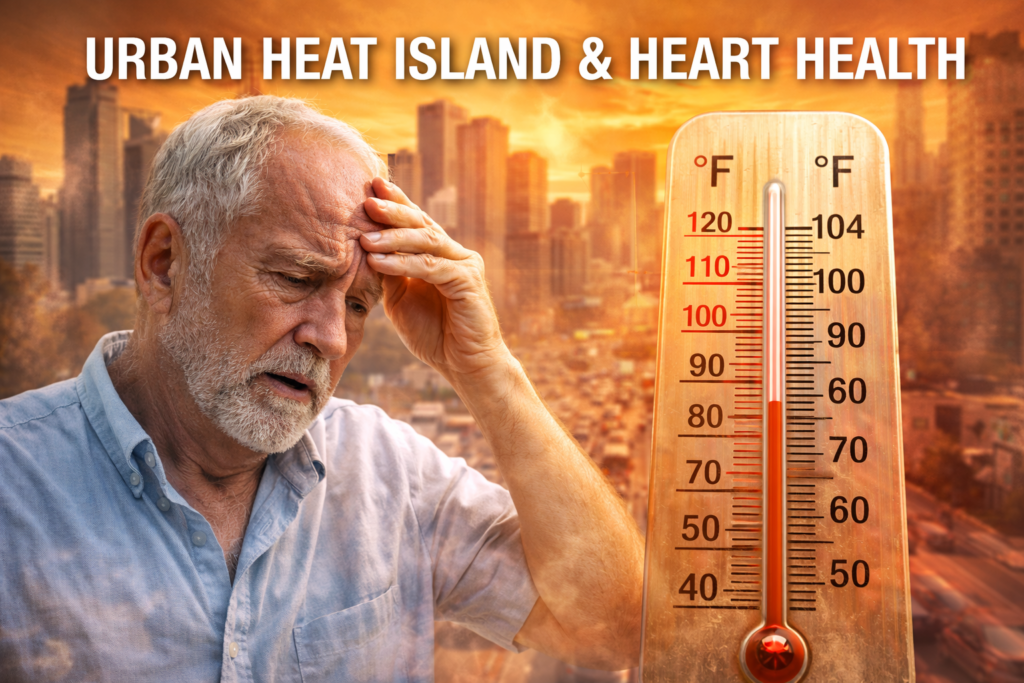
Urban heat islands make cities measurably hotter than nearby suburbs—especially at night—and that extra heat can quietly strain the heart in older Americans.
If you have ever walked from a shaded park into a downtown block of asphalt and felt the temperature jump, you have felt the urban heat island effect in real time.
Cities run hotter because buildings, roads, and roofs absorb and re-radiate heat, while limited trees and green space reduce natural cooling. The U.S. EPA describes urban areas as becoming “islands” of higher temperatures compared with surrounding areas because built surfaces store heat more than natural landscapes. (EPA)
For many older Americans, this isn’t just uncomfortable—it can be medically meaningful. That is why long-term exposure to urban heat islands can affect heart health: the heart must work harder to cool the body, maintain blood pressure, and protect vital organs during hot days and hot nights.
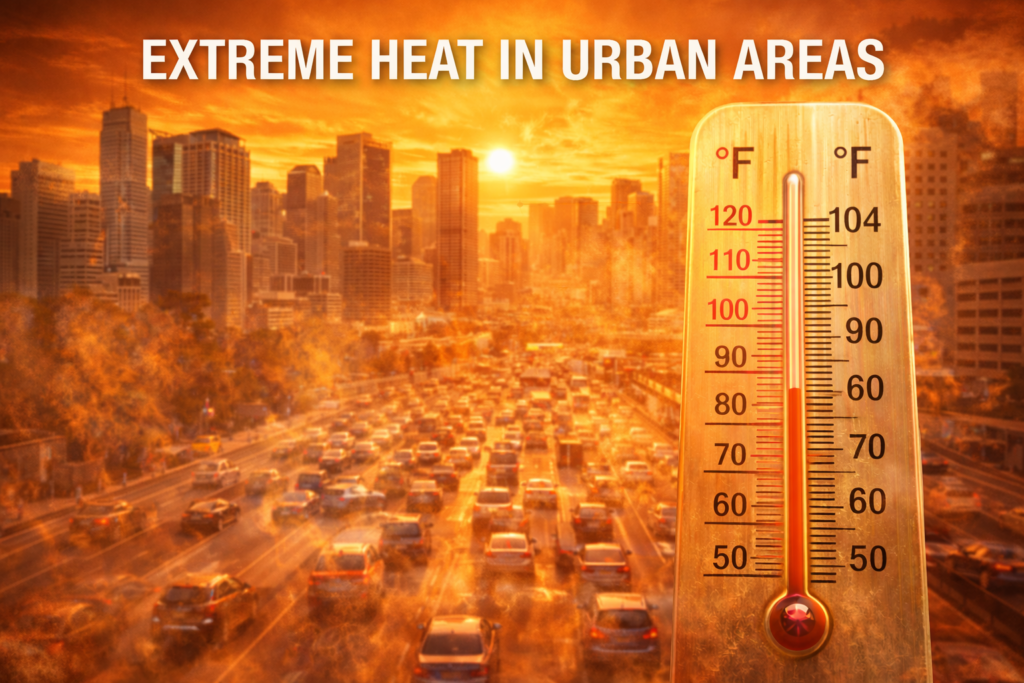
Urban heat islands happen when neighborhoods with lots of pavement, dense buildings, and dark roofs become hotter than greener areas nearby. EPA’s overview explains the core mechanism: built structures absorb and re-emit the sun’s heat more than natural landscapes. (EPA)
Many people think heat risk is mainly about scorching afternoons. But hot nights are often the bigger problem for heart health, because the body doesn’t get a cooling “reset.” When night time temperatures stay high, older adults can accumulate heat stress day after day.
The body has one main goal, that is to keep internal temperature stable. To do that, it moves warm blood towards the skin, increases sweating, and adjusts heart rate and circulation.
To cool the body, blood vessels near the skin widen (vasodilation). That can drop blood pressure. The body compensates by increasing heart rate and cardiac output. In a younger adult with healthy vessels, this is usually manageable. In an older adult—especially with hypertension, coronary disease, heart failure, or arrhythmias—the compensation is harder.
CDC’s clinical overview notes that heat can worsen cardiovascular disease and encourages clinicians to help patients plan ahead using health-based heat forecasts and heat action plans. (CDC)
How dehydration changes blood pressure, clot risk, and heart rhythm
Sweating is protective—until it turns into dehydration. When fluid loss exceeds intake:
- Blood volume drops,
- Blood can become more concentrated,
- Heart rate rises to maintain output,
- Electrolytes can shift, affecting rhythm.
WHO explains that heat extremes stress the heart and kidneys and can worsen risks from chronic conditions including cardiovascular disease. (World Health Organization)
CDC’s “Heat and Older Adults (65+)” page highlights three major reasons older adults are more vulnerable:
- They adjust less well to sudden temperature changes,
- Chronic conditions can alter normal heat responses,
- Medicines may interfere with sweating or temperature control.
EPA similarly notes aging and some medications can reduce the body’s ability to respond to heat, raising heat illness and death risk as climate warms. (EPA)
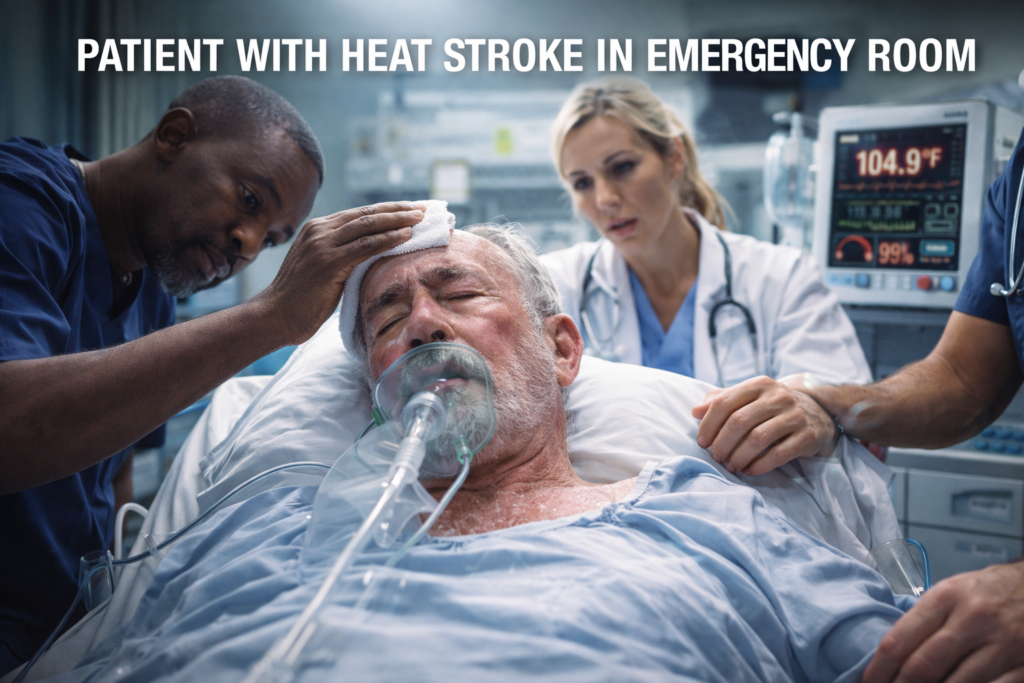
Heat can trigger acute events (a bad day becomes an ER visit). But long-term exposure can also shape cardiovascular risk indirectly.
In the short term, heat can lower blood pressure due to vasodilation. But repeated dehydration, sleep disruption from hot nights, and stress-hormone activation can destabilize overall blood pressure control.
Poor sleep is linked with higher sympathetic tone (stress response), worse glucose control, and higher blood pressure. If heat islands keep bedrooms warm at night, sleep fragmentation rises—especially in older adults with sleep apnea or heart failure.
Electrolyte changes (sodium, potassium, magnesium), dehydration, and higher catecholamines (stress hormones) can increase palpitations. Atrial fibrillation can be more symptomatic in heat, and medications like diuretics may amplify electrolyte loss.
CDC notes that more than 700 people die from extreme heat every year in the United States (a widely cited figure in CDC public guidance). (CDC)
A large U.S. analysis of the contiguous United States (2008–2017) reported that extreme heat days were associated with higher adult cardiovascular mortality rates. (PMC)
A more recent review focused on aging in a hotter environment reported:
- Cardiovascular mortality increased by 0.12% among older adults for each additional extreme-heat day per month, and
- This corresponded to ~5,000 excess cardiovascular deaths attributed to extreme-heat days from 2008–2017. (PMC)
NIH reporting on a supported study indicates that cardiovascular-related deaths due to extreme heat are expected to increase in the United States between 2036 and 2065. (National Institutes of Health)
The underlying modeling work in Circulation similarly projects increases in extreme heat–associated cardiovascular deaths, with larger projected increases among older adults. (ahajournals.org)
Heat waves affect whole regions, but urban heat islands can make certain neighborhoods hotter than others. That means two older adults in the same metro area can have different exposures.
A 2023 study on urban heat island intensity and cardiovascular impacts found that extreme heat increased cardiovascular morbidity risk and burden in older urban populations, and heat islands exacerbated those impacts—especially among already vulnerable groups (including older ages and chronic conditions).
Urban structures store heat. When nights stay hot, older adults don’t cool down. Cumulative heat stress increases dehydration risk and worsens sleep, compounding cardiac strain.
Signs to watch for
These symptoms can be heat illness, heart strain, medication effects, or a mix:
Mild-to-moderate warning signs
- Unusual fatigue or weakness
- Dizziness or lightheadedness when standing
- Headache
- Nausea
- Muscle cramps
- Swelling in ankles/feet
- Palpitations or “fluttering”
- Shortness of breath beyond baseline
When symptoms are an emergency
CDC’s heat illness guidance describes heat stroke as a medical emergency when the body can’t control temperature and it rises rapidly—this can cause permanent disability or death without urgent treatment. (CDC)
Medications as cause
Many common drugs change hydration, sweating, and circulation. Examples include:
- Diuretics (“water pills”)
- Beta blockers (may limit heart rate response)
- ACE inhibitors/ARBs (blood pressure)
- Anticholinergics (reduce sweating)
- Some antidepressants and antipsychotics (thermoregulation effects)
EPA highlights that aging and some medications can alter heat responses. (EPA)
CDC recommends clinicians and patients create a Heat Action Plan and use heat-risk forecasts during warm months.
A practical plan includes:
- A cooling location (home AC, library, mall, senior center)
- Hydration routine (with clinician guidance if heart failure/CKD)
- Medication review for summer (especially diuretics)
- Symptom thresholds for calling family/doctor
- A check-in buddy system
Cool your home
- Keep blinds/curtains closed on sun-facing windows
- Use fans strategically
- Sleep in the coolest room
- Consider a window AC unit for the bedroom if whole-home cooling isn’t possible
What to do
- Avoid strenuous activity mid-day
- Shift walks to early morning
- Take cool showers or use cool compresses
- Choose light, breathable clothing
WHO’s heat advice emphasizes staying out of the heat and paying attention to unusual symptoms—especially for older adults and those with heart disease. (World Health Organization)
General advice is “drink water,” but some older adults have fluid restrictions. The safe approach:
- Ask your clinician for a heat-day fluid plan,
- Monitor weight (rapid gains/losses),
- Watch for swelling, breathlessness, dizziness.
How to use public tools
- Use CDC’s Heat Risk guidance for planning (health-based heat forecast).
- Use Heat.gov’s older adult risk guidance for practical steps and risk context. (heat.gov)
- Follow CDC heat-health basics during events.

Community-level heat island fixes
Individuals can do a lot—but community design changes exposures for everyone.
- Tree canopy and shade structures
- Cool roofs and reflective pavement
- Parks and green corridors
- cooling centers and transport support
- Targeted outreach to older adults living alone
EPA’s heat island materials emphasize that built surfaces drive extra heat, and mitigation focuses on reducing heat absorption and increasing shade/evapotranspiration. (EPA)
FAQ’s:
1) Why do older adults have more heart problems during heat waves?
Older adults adjust less well to temperature changes, are more likely to have chronic disease, and often take medications that affect sweating or temperature control.
2) Can urban heat islands really increase heart attacks and strokes?
Extreme heat is associated with higher cardiovascular mortality in U.S. data (2008–2017), and studies suggest heat island intensity can exacerbate cardiovascular morbidity impacts in older urban populations
3) What is the most dangerous time—day or night?
Hot nights can be especially risky because the body doesn’t cool down, sleep worsens, and cumulative heat stress builds. Heat island effects often keep nighttime temperatures elevated.
4) What heart symptoms during heat should prompt urgent care?
Seek urgent care for chest pain, severe shortness of breath, fainting, confusion, or signs of heat stroke (very high temperature, altered mental state). Heat stroke is a medical emergency.
5) Do fans help older adults in extreme heat?
Fans can help in many situations, but in very high heat (especially with poor ventilation), they may be insufficient. Cooling centers or AC become important for high-risk older adults. CDC encourages planning ahead using heat-risk forecasts and heat action plans.
6) How can I protect an older parent who refuses to use AC?
Start with one-room cooling (bedroom), set routine check-ins, use cooling centers for peak days, and discuss barriers (cost, noise, dryness). Heat.gov has older-adult risk guidance that can help families plan. (heat.gov)
7) Is humidity worse for the heart than dry heat?
Humidity reduces sweat evaporation, making cooling less efficient. WHO notes the body’s inability to regulate temperature increases heat exhaustion/heatstroke risk and stresses the heart. (World Health Organization)
8) Will heat risk keep rising in the U.S.?
NIH reports modeling that cardiovascular-related deaths due to extreme heat are expected to increase in coming decades, with disproportionate impacts in some groups. (National Institutes of Health)
This article is for informational purpose only and does not substitute for professional medical advise. For proper diagnosis and treatment seek the help of your healthcare provider.
References:
- Centers for Disease Control and Prevention. (2025). Clinical overview of heat and people with cardiovascular disease. CDC
- Centers for Disease Control and Prevention. (2024). Heat and older adults (aged 65+). CDC
- Centers for Disease Control and Prevention. (2024). People at increased risk for heat-related illness. CDC
- Centers for Disease Control and Prevention. (2024). Protect yourself from the dangers of extreme heat. CDC
- Centers for Disease Control and Prevention. (2025). About heat and your health. CDC
- Centers for Disease Control and Prevention. (2024). How to use the HeatRisk tool and Air Quality Index. CDC
- Centers for Disease Control and Prevention, National Institute for Occupational Safety and Health. (2024). Heat-related illnesses (heat stroke, heat exhaustion, etc.). CDC
- National Institutes of Health. (2023). Extreme heat projected to increase cardiovascular deaths. National Institutes of Health (NIH)
- National Institutes of Health. (2023). Cardiovascular deaths likely to rise from extreme heat (NIH Research Matters). National Institutes of Health (NIH)
- World Health Organization. (2024). Climate change: Heat and health (fact sheet). World Health Organization
- World Health Organization. (2025). Health advice for hot weather (infosheet). World Health Organization
- U.S. Environmental Protection Agency. (2025). What are heat islands? EPA
- U.S. Environmental Protection Agency. (2025). Climate change and the health of older adults. EPA
- Cleland, S. E., et al. (2023). Urban heat island impacts on heat-related cardiovascular morbidity in older urban populations. Environment International. ScienceDirect+1
- Khatana, S. A. M., et al. (2022). Association of extreme heat and cardiovascular mortality in the contiguous United States (2008–2017). Nature Medicine / PubMed Central record. PMC
- Khatana, S. A. M., et al. (2023). Projected change in the burden of excess cardiovascular deaths associated with extreme heat. Circulation. ahajournals.org
- Cottle, R. M., et al. (2025). Cardiovascular challenges of aging in a hotter environment. PubMed Central. PMC
- Kenney, W. L., & Munce, T. A. (2014). Heat waves, aging, and human cardiovascular health. PubMed Central. PMC
- Heat.gov. (n.d.). At risk: Older adults. heat.gov
- World Health Organization Regional Office for Europe. (2025). How summer heat impacts health and how to #KeepCool. World Health Organization