
How to Boost Immunity Naturally at Home
Dr JK Avhad MBBS MD [ Last updated 14.12.2025 ]
A strong immune system is the foundation of long-term health. It protects the body from infections, supports healing, reduces inflammation, and improves overall wellness. The good news is that you do not need expensive supplements or medicines to strengthen immunity. Powerful natural immune boosters already exist in your kitchen, home environment, and daily habits.
This article focuses on natural ways to boost immunity at home, including diet, hydration, gut health, sleep, stress management, sunlight, lifestyle habits, herbs, and simple daily routines.
What Does Immunity Mean?
The immune system is a complex defense network made up of cells, tissues, organs, proteins, and biochemical reactions. Its role is to protect the body from infections, remove harmful substances, repair damaged tissues, and maintain overall health.
Components of the Immune System
Innate Immunity (First Line of Defense)
This is the body’s natural protective barrier. It includes:
- Skin
- Mucous membranes
- Stomach acid
- Natural killer cells
- Inflammatory response
Adaptive Immunity (Learned Immunity)
This system learns from previous infections and produces antibodies to fight pathogens more effectively in the future.
When both systems function efficiently, infections are fought faster and recovery is quicker.
Why Strengthening Immunity Naturally Matters
A strong immune system leads to:
- Fewer infections
- Faster recovery
- Better energy levels
- Reduced inflammation
- Improved digestion
- Healthier skin
- Stronger respiratory function
- Slower age-related decline
Natural immunity strategies support long-term health by strengthening every major system, including the heart, brain, gut, liver, hormones, metabolism, and sleep cycle.
How to Boost Immunity Naturally at Home
Eat Immune-Boosting Whole Foods
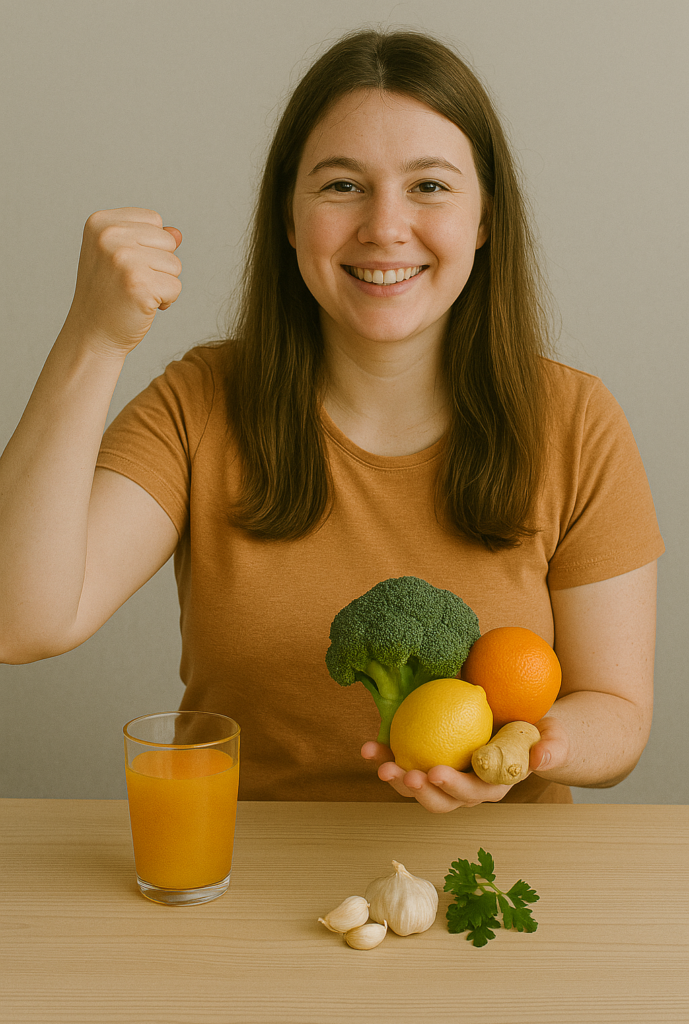
Nutrition is the foundation of immune health. Whole foods rich in vitamins, minerals, antioxidants, and phytonutrients help the body fight infections and reduce inflammation.
Citrus Fruits (Vitamin C)
- Oranges
- Lemons
- Grapefruit
- Limes
- Tangerines
Vitamin C increases white blood cell production and strengthens immune defense.
Garlic (Natural Antiviral Food)
Garlic contains allicin, which has antimicrobial and immune-enhancing properties.
Best use: Consume 1–2 crushed cloves daily with meals.
Ginger (Anti-Inflammatory Root)
Ginger helps by:
- Reducing inflammation
- Improving digestion
- Enhancing circulation
- Supporting viral defense
Use ginger in teas, soups, or warm water.
Green Leafy Vegetables
Spinach, kale, and other leafy greens provide:
- Vitamin A
- Vitamin C
- Iron
- Folate
- Antioxidants
They strengthen immune cells and reduce oxidative stress.
Turmeric (Natural Immune Herb)
Curcumin in turmeric is a powerful anti-inflammatory compound.
Use turmeric in warm milk, soups, curries, or morning water.
Yogurt and Fermented Foods (Probiotics)
Since most immune cells reside in the gut, probiotics are essential.
- Yogurt
- Homemade curd
- Kimchi
- Sauerkraut
- Kefir
These foods support gut-driven immunity.
Nuts and Seeds
- Almonds
- Walnuts
- Pumpkin seeds
- Sunflower seeds
- Chia seeds
They provide zinc and vitamin E for immune cell protection.
Stay Hydrated
Water supports toxin removal, nutrient transport, lymphatic flow, and mucous membrane health.
Natural immunity drinks:
- Ginger-lemon tea
- Turmeric warm water
- Cumin-coriander-fennel water
- Mint-lemon infused water
- Tulsi tea
Aim for 8–10 glasses daily.
Sleep 7–9 Hours Every Night
During sleep, the body:
- Produces immune proteins
- Repairs tissues
- Regulates hormones
- Reduces inflammation
Poor sleep weakens immunity faster than most lifestyle factors.
Reduce Stress Naturally
Chronic stress raises cortisol, which suppresses immune activity.
Effective stress-reduction habits:
- Deep breathing
- Meditation
- Gentle yoga
- Walking outdoors
- Journaling
- Listening to calming music
Even 10 minutes daily improves immune response.
Get Daily Sunlight (Vitamin D)
Vitamin D supports:
- White blood cell activation
- Antibody production
- Reduced infection risk
Spend 15–20 minutes daily in natural sunlight.
Move Your Body Regularly
Moderate exercise improves circulation and immune surveillance.
Best home exercises:
- Walking
- Yoga
- Stretching
- Dancing
- Light strength training
Avoid over-exercising, which can weaken immunity temporarily.
Reduce Sugar and Processed Foods
Excess sugar lowers white blood cell efficiency.
Avoid:
- Soft drinks
- Packaged snacks
- Refined carbohydrates
Choose whole fruits, grains, nuts, and home-cooked meals.
Improve Gut Health
Support gut immunity by:
- Eating probiotics
- Adding prebiotics (banana, oats, garlic)
- Increasing fiber
- Reducing fried foods
- Staying hydrated
Natural Immunity-Supporting Herbs
- Tulsi (holy basil)
- Ashwagandha
- Giloy
- Ginger
- Turmeric
- Oregano
- Elderberry
These herbs support immune balance and inflammation control.
Maintain a Healthy Body Weight
Healthy weight reduces chronic inflammation and supports immune efficiency.
Simple habits:
- Eat fiber-rich foods
- Walk after meals
- Avoid late-night eating
- Drink enough water
Improve Indoor Air Quality
Good indoor air supports respiratory immunity.
- Open windows daily
- Reduce dust
- Avoid chemical sprays
- Use indoor plants
Practice Good Hygiene
- Wash hands regularly
- Clean frequently touched surfaces
- Wash fruits and vegetables properly
Use Steam Inhalation
Steam helps open nasal passages and supports respiratory defense.
Optional: add eucalyptus or peppermint oil.
Daily Immune-Boosting Routine
Morning
- Warm lemon water
- Sunlight exposure
- Deep breathing
- Protein-rich breakfast
Afternoon
- Balanced lunch
- Short walk
- Hydration
- Fruit snacks
Evening
- Stretching
- Herbal tea
- Digital detox
Night
- Light dinner
- Early sleep (7–9 hours)
Simple Homemade Immunity Recipes
Ginger–Lemon Shot
Ginger, lemon, honey, warm water
Turmeric Latte (Golden Milk)
Turmeric, black pepper, milk, honey
Vitamin C Smoothie
Orange, kiwi, berries, chia seeds
FAQ’s:
Q. Can immunity be boosted without supplements?
Yes. Diet, sleep, sunlight, hydration, and stress control are more effective.
Q. How long does it take to improve immunity naturally?
Noticeable improvements often occur within 2–4 weeks.
Q. Which fruits boost immunity the most?
Citrus fruits, berries, kiwi, papaya, and pineapple.
Q. Does stress weaken immunity?
Yes. Chronic stress reduces immune cell activity.
Conclusion
Building strong immunity is a daily practice, not a one-time solution. You do not need supplements or expensive treatments. Consistent, natural habits are enough.
By eating nutrient-rich foods, sleeping well, managing stress, staying active, improving gut health, and maintaining a clean lifestyle, your immune system becomes stronger, faster, and more resilient over time.
This article is for informational purpose only and does not substitute for professional medical advise. For proper diagnosis and treatment seek the help of your healthcare provider.
References:
- Calabrese, L. (n.d.). How your immune system is affected by diet, stress, and exercise. Cleveland Clinic Health Essentials Podcast. Retrieved from https://my.clevelandclinic.org/podcasts/health-essentials/how-your-immune-system-is-affected-by-diet-stress-and-exercise-with-dr-leonard-calabrese
- Harvard T.H. Chan School of Public Health. (n.d.). Nutrition and immunity. The Nutrition Source. Retrieved from
https://nutritionsource.hsph.harvard.edu/nutrition-and-immunity/ - Harvard Medical School. (n.d.). How to boost your immune system. Harvard Health Publishing. Retrieved from
https://www.health.harvard.edu/staying-healthy/how-to-boost-your-immune-system - Institute for Functional Medicine (IFM). (2020). Lifestyle strategies to boost immunity & reduce infections. Retrieved from
https://www.ifm.org/articles/lifestyle-strategies-boost-immunity-reduce-infections/ - Kim, S. Y., & Park, S. C. (2021). Diet and immunity: A review of nutritional factors involved in immune function. Food Science & Nutrition, 9(3), 1448–1461.
https://onlinelibrary.wiley.com/doi/10.1002/fsn3.3628 - Koltai, M., et al. (2021). Exercise and immunity: A mechanistic review. Journal of Sport and Health Science, 10(3), 334–349.
https://www.sciencedirect.com/science/article/pii/S2095254618301005 - Mayo Clinic Health System. (2023). Fight off the flu with nutrients. Retrieved from
https://www.mayoclinichealthsystem.org/hometown-health/speaking-of-health/fight-off-the-flu-with-nutrients - Nutritional immunology. (2023). In Wikipedia. Retrieved from
https://en.wikipedia.org/wiki/Nutritional_immunology - Özdemir, G. (2021). Environmental factors affecting immune health. Journal of Environmental and Public Health, 5(2), 112–119.
Retrieved from https://dergipark.org.tr/en/download/article-file/1960141 - Pawelec, G. (2021). Age and the immune system. Nature Reviews Immunology, 21, 335–345.
https://pmc.ncbi.nlm.nih.gov/articles/PMC7646052/ - Potter, H., et al. (2023). Sleep and immune health: Current evidence and future directions. Sleep Medicine Reviews, 65, 101–113.
https://www.sciencedirect.com/science/article/pii/S2666354623000753 - Powell, R., et al. (2021). Exercise, inflammation, and immune function. Frontiers in Immunology, 12, Article 281.
https://pmc.ncbi.nlm.nih.gov/articles/PMC8531728/ - Sah, S. P., et al. (2025). Strenuous endurance exercise and temporary immune suppression: Mechanisms and risks. Current Opinion in Physiology, 28, 102–110.
https://www.sciencedirect.com/science/article/pii/S2405457725000324 - Thomas, J., & Keller, M. (2022). Micronutrients and immune system function: A review. Journal of Nutrition Research, 3(1), 24–39.
https://www.sciencedirect.com/science/article/pii/S0023643822000895