
Urea Adulteration of Milk and its Adverse Health Effects
Dr JK Avhad MBBS MD [Last updated 06.01.2026]
Milk is widely regarded as one of the most complete and essential foods, consumed daily by infants, children, adults, and older people. In many households, it is trusted without question—used in tea, coffee, cereals, infant feeding, and nutritional supplements. However, milk adulteration with urea has emerged as a serious public health concern in several parts of the world and remains relevant even for consumers in countries with relatively strong food safety systems.
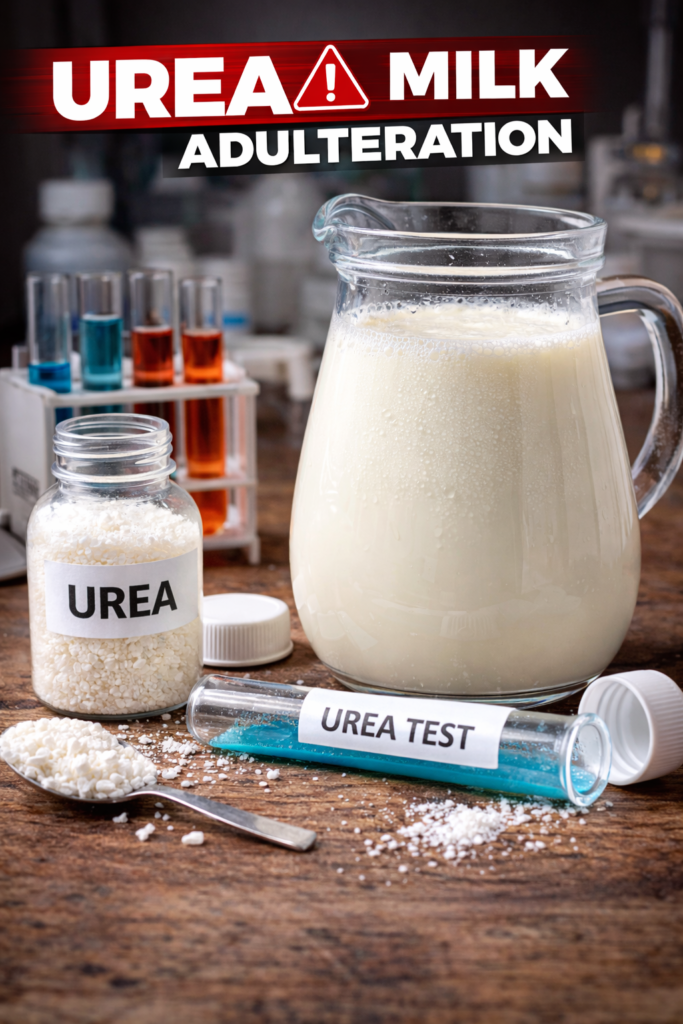
Urea is a nitrogen-rich chemical naturally present in small amounts in milk as a metabolic by-product. The problem arises when industrial or synthetic urea is deliberately added to diluted milk to falsely increase its apparent protein content and whiteness. This practice is economically motivated but medically dangerous. Regular consumption of urea-adulterated milk may expose individuals to chronic kidney stress, liver toxicity, gastrointestinal irritation, and metabolic disturbances.
The World Health Organization recognizes food adulteration as a major contributor to preventable disease and chronic exposure to chemical contaminants through diet can have long-term systemic effects.
[Also read: Chemical Ripening of Fruits and Its Long-Term Adverse Effects on Human Health]
[Click here: https://healthconcise.com/chemical-ripening-of-fruits-and-its-long-term-adverse-effects-on-human-health/]
Natural vs adulterated urea in milk
Urea is a normal metabolic waste product formed during protein metabolism. Naturally occurring urea is present in milk in very small, tightly regulated amounts and does not pose a health risk.
Adulteration occurs when synthetic or industrial urea is added deliberately, usually to:
- Compensate for dilution with water
- Falsely elevate measured protein levels
- Improve visual whiteness and thickness
This practice is often linked to synthetic milk production, where water, detergents, vegetable oils, glucose, and urea are combined to mimic real milk.
Urea adulteration can occur at multiple points:
- At farm level to increase volume
- During transportation to mask spoilage
- In informal or unregulated milk markets
- In poorly monitored supply chains
While large commercial dairies are subject to stricter regulation, informal markets and illegal operators remain the highest-risk sources.
The human body normally eliminates urea through the kidneys via urine. When excess urea is ingested regularly through food:
- Blood urea levels may rise
- Kidney filtration workload increases
- Acid–base balance may be disturbed
Healthy kidneys can compensate temporarily, but chronic dietary urea overload places sustained stress on renal and hepatic systems.
Early Health Effects
1. Gastrointestinal irritation and digestive symptoms
- Nausea
- Abdominal pain
- Gastric irritation
- Bloating and indigestion
- Diarrhea or loose stools
Urea breaks down into ammonia in the gut, which is highly irritating to the gastrointestinal lining.
2. Metallic or unpleasant taste and mouth irritation
Some consumers report:
- Bitter or chemical taste
- Burning sensation in the mouth or throat
- Excess salivation
These symptoms are often dismissed initially but can be early indicators of adulteration.
3. Headache, dizziness, and fatigue
Elevated ammonia levels in the blood may lead to:
- Headache
- Mental fatigue
- Lightheadedness
- Reduced concentration
These symptoms are especially noticeable in children and older adults.
Long-Term Health Effects
1. Kidney stress and impaired renal function
The kidneys are the primary organs responsible for urea elimination. Long-term exposure may contribute to:
- Increased blood urea nitrogen (BUN) levels
- Reduced renal reserve
- Accelerated progression of chronic kidney disease
Individuals with pre-existing kidney conditions are at significantly higher risk.
2. Liver overload and metabolic imbalance
The liver converts ammonia into urea through the urea cycle. Excess dietary urea:
- Overloads hepatic detoxification pathways
- Increases oxidative stress
- May worsen fatty liver disease
3. Acid–base disturbances
Excess urea and ammonia can disturb the body’s pH regulation, leading to:
- Metabolic acidosis
- Muscle weakness
- Bone demineralization over time
4. Neurological effects in severe or prolonged exposure
In extreme or long-term cases:
- Confusion
- Reduced cognitive performance
- Irritability
- Sleep disturbances
These effects are linked to ammonia-related neurotoxicity.
Health Effects in Children and Infants
Children are particularly vulnerable due to:
- Immature kidneys and liver
- Higher milk consumption relative to body weight
- Developing nervous systems
Potential risks in children include:
- Poor weight gain
- Recurrent abdominal pain
- Reduced appetite
- Behavioral changes
- Increased susceptibility to dehydration
Infants fed adulterated milk may develop electrolyte imbalances and failure to thrive.
Risks During Pregnancy
Pregnant individuals consuming urea-adulterated milk may face:
- Increased metabolic stress
- Electrolyte imbalance
- Potential effects on fetal development
Although direct evidence is limited, dietary chemical exposure during pregnancy is considered a preventable risk factor by WHO.
High-risk groups include:
- People with kidney disease
- Individuals with liver disorders
- Diabetics
- Elderly adults
In these populations, even low-level chronic exposure can worsen disease progression.
Warning Signs
Seek medical advice if regular milk consumption is followed by:
- Persistent digestive discomfort
- Rising kidney function test values without explanation
- Chronic fatigue
- Headache and nausea after milk intake
- Similar symptoms in multiple family members
Early recognition can prevent long-term organ damage.
How Urea Adulteration Is Detected
Laboratory detection methods include:
- Enzymatic assays
- Spectrophotometric analysis
- Milk quality testing kits
Consumers should not rely on taste alone, as urea may not always be easily detectable.
Public Health and Regulatory Perspective
The WHO considers food adulteration a form of chemical exposure that undermines nutrition and safety. Regulatory bodies emphasize:
- Supply chain monitoring
- Random testing
- Consumer education
Chronic dietary exposure to chemical adulterants contributes to the global burden of non-communicable diseases.
How Consumers Can Reduce Risk
1. Buy milk from reputable, regulated sources
2. Avoid unusually cheap milk products
3. Be cautious with informal or unlabelled milk
4. Report suspicious milk quality to authorities
5. Diversify dietary protein sources
Our Advice
- Do not boil suspicious milk repeatedly (heat does not remove urea)
- Avoid feeding questionable milk to infants or elderly family members
- Seek testing if adulteration is suspected
Conclusion
Urea adulteration of milk represents a silent but significant health risk, particularly because milk is consumed daily and often trusted implicitly. While small amounts of naturally occurring urea are harmless, the deliberate addition of synthetic urea places unnecessary strain on the kidneys, liver, and metabolic systems. Early symptoms such as digestive discomfort, headache, and fatigue are often overlooked, allowing long-term damage to develop unnoticed.
Children, pregnant individuals, older adults, and people with kidney or liver disease are especially vulnerable. From a public health perspective, preventing urea adulteration requires strong regulation, vigilant monitoring, and informed consumers. Choosing reputable sources and recognizing early warning signs can significantly reduce risk. Safe milk is not just a nutritional issue—it is a cornerstone of long-term health and disease prevention.
Frequently Asked Questions (FAQs)
1. Is urea naturally present in milk?
Yes, urea is naturally present in very small amounts as a metabolic by-product. Health risks arise only when synthetic urea is added deliberately.
2. Can boiling milk remove urea adulteration?
No. Boiling does not remove urea and may concentrate it further by evaporating water.
3. What organs are most affected by urea-adulterated milk?
The kidneys and liver are most affected, followed by the gastrointestinal and nervous systems.
4. Are children more sensitive to urea-adulterated milk?
Yes. Children consume more milk relative to body weight and have immature detoxification systems, making them more vulnerable.
5. How can I confirm if milk is adulterated with urea?
Definitive confirmation requires laboratory testing or approved milk testing kits. Taste or appearance alone is unreliable.
[Also read: Cooking Oil Adulteration and Health Effects: A Detailed Public Health Guide]
[Click here: https://healthconcise.com/cooking-oil-adulteration-and-health-effects-a-detailed-public-health-guide/]
This article is for informational purpose only and does not substitute for professional medical advise. For proper diagnosis and treatment seek the help of your healthcare provider.
References:
- World Health Organization. (2023). Food safety and chemical contaminants.
- World Health Organization. (2022). Dietary exposure to chemical hazards.
- Centers for Disease Control and Prevention. (2024). Food safety and chronic disease prevention.
- National Institutes of Health. (2023). Kidney function and nitrogen metabolism.
- U.S. Food and Drug Administration. (2023). Food adulteration and misbranding.
- EFSA Panel on Contaminants. (2012). Scientific opinion on chemical contaminants in food.
- Gupta, R. C. (2018). Toxicology of chemical food adulterants. Academic Press.
- Sharma, V., et al. (2021). Health impacts of milk adulteration. Journal of Food Safety.
- Landrigan, P. J., et al. (2018). Pollution and global health. The Lancet.
- FAO & WHO. (2019). Food fraud and public health risks.