
Why Are Anxiety and Stress Symptoms Higher in Americans Living in Environmentally Degraded Urban Areas?
Dr JK Avhad MBBS MD [Last updated 31.12.2025]
In many American cities, two neighborhoods can sit just a few miles apart yet feel like different worlds. One has shade trees, quieter streets, clean parks, and predictable sleep.
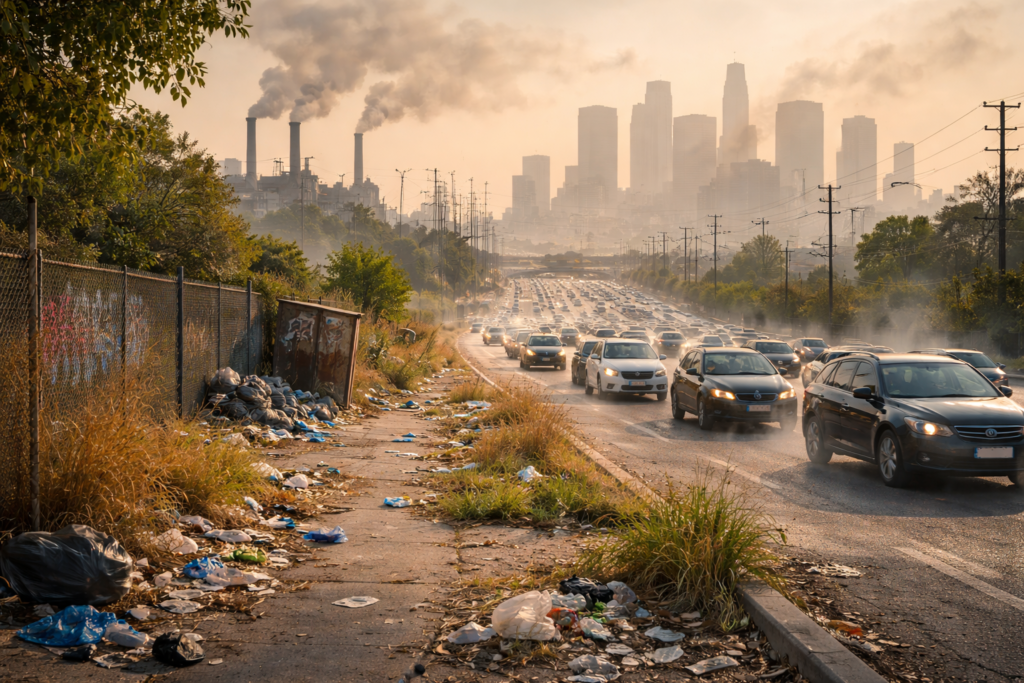
The other sits near highways, rail yards, warehouses, industrial corridors, and heat-trapping pavement—where the air tastes “exhausty,” sirens are constant, and summer nights never cool down. People in these environments often report higher anxiety symptoms, irritability, racing thoughts, poor sleep, and stress overload. Sometimes it’s dismissed as lifestyle or personality, but the reality is more layered.
Environmental degradation can act like a daily “background stressor” that never turns off: air pollution, chronic noise, crowding, heat, and reduced access to restorative green space.
Over time, these conditions can strain the nervous system and amplify worry, tension, and stress sensitivity—especially for people already juggling health issues, financial pressures, or limited mobility.
Anxiety and chronic stress symptoms often feel higher in Americans living in environmentally degraded urban neighborhoods—places with heavy traffic pollution, industrial emissions, noise, heat, limited trees, and fewer safe green spaces.
“Environmentally degraded” usually doesn’t mean one single exposure. It often means cumulative burden, including:
- Traffic-related air pollution (PM2.5, ultrafine particles, NO₂)
- Industrial emissions and freight activity (diesel corridors, ports, rail yards)
- Chronic noise (traffic, aircraft, industrial operations)
- Urban heat island conditions (hotter days and nights)
- Lower access to green space, tree canopy, and safe parks
- Higher exposure to environmental hazards plus fewer resources to buffer the impacts
The U.S. EPA uses “overburdened communities” to describe populations that may experience disproportionate environmental harms and risks due to cumulative impacts and greater vulnerability. (epa.gov)
Also read: How Does Climate Change–Related Heat Stress Affect Blood Pressure and Circulation in Older Americans?
Data:
Anxiety isn’t rare in the U.S.—even before considering neighborhood effects.
- CDC reports that in 2019, 8.1% of U.S. adults had symptoms of anxiety disorder (NHIS benchmark), and those benchmarks are used to compare with later Household Pulse Survey estimates. (CDC)
- CDC FastStats (2024 NHIS Early Release) reports 12.1% of adults had regular feelings of worry, nervousness, or anxiety. (CDC)
Causes:
The brain constantly scans for safety. Environments with persistent hazards—loud traffic, poor air, unsafe crossings, industrial odors, visible grime—can keep the body’s stress response partially “on” all day.
Over time, chronic activation can affect sleep, heart rate variability, inflammation, and attention—each of which feeds anxiety symptoms.
Air pollution
Air pollution is best known for lung and heart effects, but evidence linking pollution to mental health has grown substantially.
- Air pollution can harm the brain and is linked with increased risk of anxiety and depression, in addition to other health outcomes. (World Health Organization)
- A 2023 JAMA Psychiatry study reported that long-term exposure to multiple air pollutants was associated with increased risk of depression and anxiety. (JAMA Network)
- A 2024 open-access study found evidence of associations between long-term PM2.5 exposure and depression/anxiety (with stronger signals for these outcomes than for “stress/worry” measures). (PMC)
- Earlier U.S. work in older adults reported PM2.5 exposure was positively associated with moderate-to-severe depressive and anxiety symptoms, with stronger susceptibility in lower socioeconomic groups and those with health conditions. (PMC)
Pollution and Brain
Researchers propose several plausible mechanisms:
- Inflammation and oxidative stress affecting brain signaling
- Vascular effects that influence brain perfusion
- Neuroinflammation pathways triggered by fine particles
Traffic noise and sleep disruption
Noise is not just annoying—nighttime noise fragments sleep and reduces deep restorative phases. Poor sleep increases:
- Threat sensitivity
- Irritability
- Rumination
- Panic vulnerability
Even without a single dramatic event, chronic sleep disruption becomes a mental health amplifier.
Urban heat, humidity, and hot nights
Heat makes the body work harder to maintain temperature. Hot nights are especially disruptive because they prevent recovery sleep. Physiologically, heat can:
- Increase heart rate
- Worsen dehydration
- Raise discomfort and irritability
- Increase conflict and perceived stress
Green space
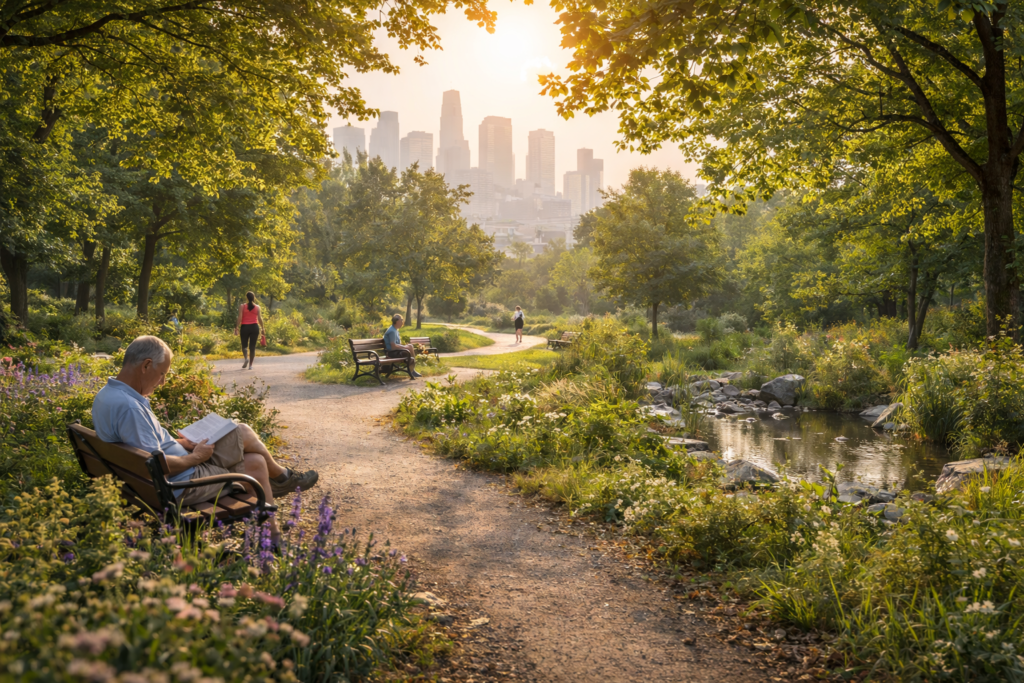
Green space isn’t a luxury—it’s a nervous system reset button. Exposure to green spaces is associated with multiple health benefits, including mental health benefits such as reduced risk of depression and anxiety. (World Health Organization)
When neighborhoods lack safe parks, tree canopy, or quiet walking routes, residents lose daily opportunities for “downshifting.”
Cumulative burden
Environmentally degraded neighborhoods often combine:
- Pollution, noise, heat, crowding, safety concerns
- Housing quality issues, indoor pollutants
- Fewer healthcare and mental health services
- More financial and time stress
This layering effect is consistent with EPA’s framing of disproportionate harms and cumulative impacts in overburdened communities. epa.gov.
Also read: Why Are Skin Rashes and Unexplained Itching More Common in Americans Exposed to Environmental Toxins?
Symptoms
- Persistent worry and “on edge” feeling
- Chest tightness, faster heartbeat, breath hunger
- Trouble falling asleep (or waking up early, unable to return to sleep)
- Irritability, low frustration tolerance
- Headaches, GI symptoms, muscle tension
- Brain fog, poor concentration
- Doom scrolling and compulsive checking for threats (weather, news, crime alerts)
When symptoms tend to flare
- High-AQI or smoggy days
- Heat waves and hot nights
- Long stretches of loud nighttime noise
- After strong odors or visible industrial emissions
- During wildfire smoke events (in affected regions)
Not everyone can relocate. The goal becomes: reduce peaks, improve recovery, and build buffers.
Improve indoor air
- Use a HEPA air purifier in the bedroom
- Keep windows closed during heavy traffic periods or smoke days
- Ventilate when outdoor air is cleaner (often early morning, depending on your city)
- Wet-mop/damp-dust to reduce particles tracked indoors
Reduce noise load
- White noise machine or fan (steady sound masks spikes)
- Heavy curtains / draft sealing
- Rear-room sleeping if possible (away from street-facing windows)
- Earplugs if tolerated
Micro-green space
Even small exposures help:
- 10-minute walk near trees (school campuses, quiet blocks, cemeteries in some cities)
- Sitting near any green patch (community garden edges, shaded courtyards)
- Balcony or window plants if outdoor green is limited
WHO’s summary of green space benefits supports the “small exposure, repeated often” approach. (World Health Organization)
How to protect mental health during heat and climate stress
- Prioritize nighttime cooling strategies (fan, ventilation timing, cooling centers)
- Hydrate steadily (if no medical fluid restriction)
- Adjust activity to cooler hours
- Plan “heat wave routines” to reduce decision fatigue
How to lower the “threat signal” load
In high-stress environments, constant alerts (AQI apps, crime feeds, weather warnings) can worsen anxiety.
Try:
- One scheduled “check window” per day (e.g., morning)
- Turn off non-essential notifications
- Follow a simple action plan
When anxiety is no longer “normal stress”
Seek professional support if:
- Anxiety lasts most days for weeks
- Sleep is consistently impaired
- Panic attacks occur
- You avoid essential activities (work, shopping, appointments)
- You use alcohol/cannabis more to cope
- You have hopelessness or thoughts of self-harm
Also read: How Does Exposure to Agricultural Pesticides Affect Hormonal Balance and Metabolism in U.S. Adults?
[Click here: https://healthconcise.com/how-does-exposure-to-agricultural-pesticides-affect-hormonal-balance-and-metabolism-in-u-s-adults/]
FAQs
1) Is it “proven” that polluted neighborhoods cause anxiety?
Evidence supports associations between long-term air pollution exposure and depression/anxiety outcomes, including major studies and reviews. Causality is complex because neighborhoods differ in many ways, but biologic mechanisms (inflammation/oxidative stress, sleep disruption, stress physiology) are plausible and supported.
2) Why do I feel more anxious on bad air days?
Pollution can act like a physiologic stressor and may worsen sleep and inflammation. WHO explicitly notes links between air pollution and increased risk of anxiety/depression.
3) What matters more for anxiety: pollution, noise, or heat?
Often it’s the stacking effect. Pollution may influence biology, noise fragments sleep, and heat increases discomfort and sleep loss. The combination is usually the problem.
4) Does green space really help mental health?
Yes, evidence consistently links green space exposure with mental health benefits, including reduced risk of depression and anxiety.
5) If I can only do one thing, what should it be?
Protect sleep: improve bedroom air, reduce nighttime noise, and keep the sleeping space as cool as possible in summer. Better sleep lowers anxiety intensity and improves coping.
6) Are older adults or people with chronic disease more affected?
Many studies find higher susceptibility in people with lower socioeconomic status or chronic health conditions. Older adults also show associations between PM2.5 and anxiety/depressive symptoms. (PMC)
7) Can disasters and displacement worsen anxiety in affected urban communities?
Yes. Household Pulse Survey–based analyses show anxiety/depression symptoms are associated with disaster-induced displacement and duration of displacement—relevant as climate disasters increase.
8) What should city governments prioritize to reduce “environmental anxiety”?
Reducing pollution and noise, increasing tree canopy/green space, heat mitigation (cool roofs, shade), and improving access to mental health services in overburdened communities aligns with environmental justice priorities.
Conclusion
Anxiety and chronic stress in environmentally degraded urban areas are rarely just “in your head.” They’re often the predictable result of a nervous system living in a setting with constant inputs: polluted air, relentless noise, hotter nights, fewer safe green spaces, and cumulative daily strain. U.S. data shows anxiety symptoms are common nationwide, and research increasingly supports links between long-term pollution exposure and depression/anxiety risk. The good news is that small, practical changes can meaningfully lower symptom load: turning the bedroom into a recovery zone with cleaner air and quieter sleep, building micro-doses of green exposure into the week, and using simple heat-and-AQI action plans to reduce uncertainty. At the community level, environmental justice matters—because cleaner air, cooler neighborhoods, and safer green space aren’t just “amenities.” They’re public mental health infrastructure.
This article is for informational purpose only and does not substitute for professional medical advise. For proper diagnosis and treatment seek the help of your healthcare provider.
References:
- Centers for Disease Control and Prevention. (2025). Mental Health – Household Pulse Survey. CDC
- Centers for Disease Control and Prevention. (2025). Household Pulse Survey: Health care access and mental health tables. CDC
- Centers for Disease Control and Prevention, National Center for Health Statistics. (2025). FastStats – Mental Health (2024 NHIS early release). CDC
- U.S. Environmental Protection Agency. (2025). Definition of “overburdened community” relevant to EPA actions. epa.gov
- World Health Organization. (n.d.). Air pollution (health topic page). World Health Organization
- World Health Organization. (2025). Health impacts of air pollution (green spaces and mental health benefits). World Health Organization
- Yang, T., et al. (2023). Long-term exposure to multiple ambient air pollutants and risk of depression and anxiety. JAMA Psychiatry. JAMA Network
- Lyons, S. (2024). Long-term exposure to PM2.5 air pollution and mental health. [Open-access article] PMC
- Ali, N. A., et al. (2019). Growing evidence for the impact of air pollution on depression and mental health. [Review] PMC
- Pun, V. C., et al. (2016). Association of ambient air pollution with depressive and anxiety symptoms in U.S. older adults. Environmental Health Perspectives. PMC
- Nobile, F., et al. (2023). Long-term exposure to air pollution and incidence of mental disorders (including role of road traffic noise). Environmental Research. ScienceDirect
- Barnor, K. (2025). The impact of air pollution on mental health: Evidence from quasi-experimental methods. Journal of Health Economics. ScienceDirect
- Aung, T. W., et al. (2025). Depression and anxiety symptoms in adults displaced by disasters (Household Pulse Survey). [Open-access article] PMC
- OECD. (2024). Environmental Justice. OECD
- Kato-Huerta, J., et al. (2023). A distributive environmental justice index to support green planning. Landscape and Urban Planning. ScienceDirect