
Why Are Autoimmune-Like Symptoms More Frequently Reported by Americans Exposed to Long-Term Environmental Toxins?

Dr JK Avhad MBBS MD [Last updated 27.12.2025]
If you talk to people who’ve lived for years near industrial corridors, busy freight routes, contaminated water advisories, or high-exposure jobs (construction, manufacturing, farming, firefighting), you’ll hear a similar story:
“I’m tired all the time.”
“My joints ache like I’m 70.”
“My skin is acting up.”
“I feel inflamed.”
“My labs are ‘borderline,’ but nobody can explain why.”
Sometimes these symptoms are early autoimmune disease. Sometimes they’re not autoimmune at all—sleep apnea, anemia, thyroid disease, medication side effects, chronic infections, depression, long COVID, fibromyalgia, or straightforward mechanical issues can look very similar.
Autoimmune-like symptoms—fatigue, aching joints, brain fog, rashes, dry eyes, digestive flares—are often reported by Americans who live or work around long-term environmental toxins.
But here’s the key: people don’t imagine symptoms out of nowhere, and the science increasingly supports what clinicians have suspected for decades—environmental exposures can influence immune function and may raise risk for certain autoimmune diseases in susceptible individuals.
Also read: Why Are Digestive Issues and Acid Reflux More Common in Americans Living Near Heavy Traffic and Industrial Zones?
What are “autoimmune-like symptoms
“Autoimmune-like” describes symptoms that resemble autoimmune disease but aren’t yet confirmed by diagnosis. Common examples include:
- Persistent fatigue or post-exertional crashes
- Joint pains and morning stiffness
- Muscle aches, “flu-like” body pain
- Rashes, hives, or unusual skin sensitivity
- Dry eyes or dry mouth
- Headaches, brain fog, poor concentration
- GI flares (bloating, diarrhea/constipation swings)
- Tingling, numbness, sensitivity to heat/cold
Autoimmune diseases can start slowly, with vague symptoms long before clear lab findings. Also, some people experience immune dysregulation that never becomes a classic autoimmune diagnosis.
National Institute of Allergy and Infectious Diseases (NIAID) notes autoimmune diseases are conditions where the immune system mistakenly attacks healthy tissues and describes their broad range and variability. (NIAID)
- A large U.S. electronic health record analysis estimated over 15 million people (about 4.6%) had at least one autoimmune disease using strict criteria (e.g., repeated diagnosis codes). (PMC)
- NIAID’s public-facing estimate is that about 8% of the U.S. population has an autoimmune disease. (NIAID)
- CDC materials also emphasize that autoimmune diseases disproportionately affect women (often cited around ~78% female across many autoimmune diseases). (CDC)
To anchor one specific disease, CDC estimates about 204,000 people in the U.S. have systemic lupus erythematosus (SLE) based on the most recent data available. (CDC)
Your immune system’s job is to detect threats. Many environmental toxins behave like “danger signals”:
- They irritate tissues,
- Generate oxidative stress,
- Disrupt barrier surfaces (lungs, skin, gut),
- Trigger inflammatory pathways.
A major review on environmental exposures and autoimmune diseases describes growing evidence linking exposures (e.g., solvents like TCE, silica, mercury, pesticides, smoking) to higher autoimmune risk, while emphasizing mechanisms are complex and not fully understood. (PMC)
How oxidative stress becomes symptoms
Oxidative stress can activate inflammatory messengers that affect:
- Pain sensitivity,
- Sleep quality,
- Energy metabolism,
- Vascular tone,
- Brain function.
A toxicology review discusses how chemicals and drugs can promote autoimmunity, framing the immune system as vulnerable to certain extrinsic triggers. (PMC)
Endocrine-disrupting chemicals (EDCs)—like BPA, some pesticides, phthalates, dioxin-like compounds—can interfere with hormone signaling that normally helps regulate immune function.
- A 2023 review discusses EDC exposure affecting immune function and contributing to autoimmune disease development. (PubMed)
- WHO’s endocrine disruptor science summaries explain that EDCs are an area of significant research concern for human health. (World Health Organization)
Gut microbiome
The gut is a major immune organ. Pollutants can reach it through swallowed particles, contaminated water, and food-chain exposure.
A foundational review discusses how air pollution can alter gut microbiota and contribute to intestinal inflammation and immune changes. (PubMed)
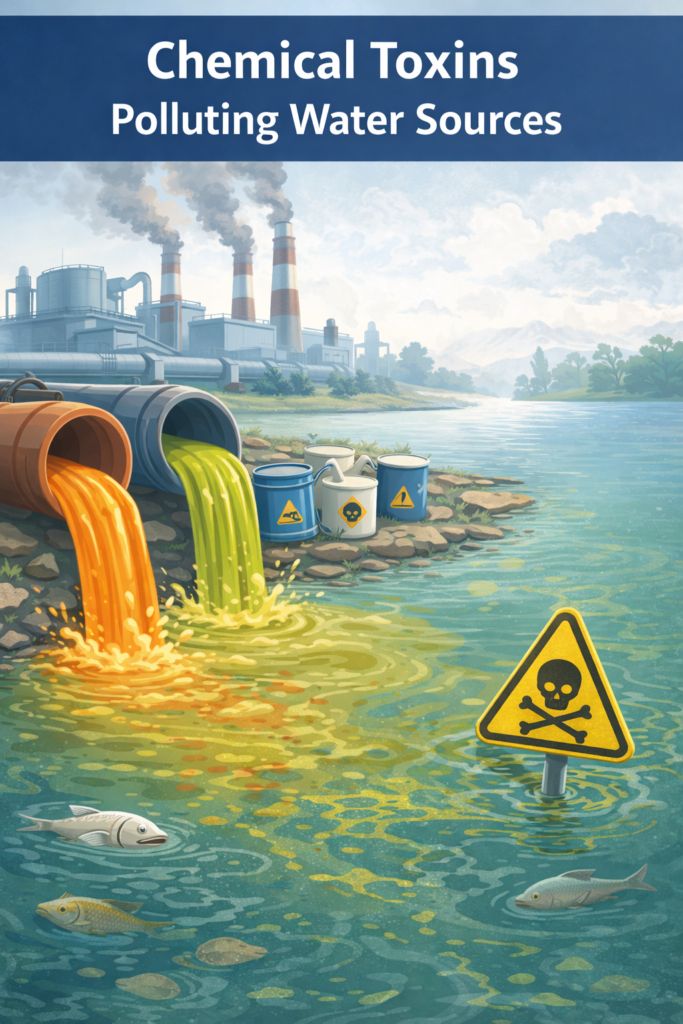
Also read: How Does Long-Term Exposure to Urban Heat Islands Affect Heart Health in Older Americans?
Below are common toxin categories in American life with varying evidence strength. The honest takeaway is not “everything causes autoimmunity,” but that some exposures are more strongly implicated than others, especially in occupational settings or heavily contaminated environments.
PFAS (forever chemicals)
PFAS are persistent chemicals used in many products and industrial processes. They’re widely detected in people, and research suggests immune impacts.
- Reviews and studies describe PFAS as immunomodulatory, with associations reported for immune-related outcomes and, in some studies, autoimmune disease signals.
- A 2025 Nature Communications paper examined PFAS and PCB metabolites in relation to multiple sclerosis risk and discusses complex, sometimes conflicting epidemiology across diseases. (Nature)
- A 2023 study explored PFAS exposure and immune-mediated diseases (including autoimmune diseases) in an adult population. (PubMed)
Trichloroethylene (TCE)
TCE is an industrial solvent that has been studied in relation to immune effects.
- Reviews have concluded that evidence from animal models and human studies supports an etiologic role for TCE in some autoimmune disorders (with important nuance and ongoing research).
Silica dust and autoimmune rheumatic disease
Crystalline silica (think stone cutting, sandblasting, mining, construction, certain manufacturing) has long been connected to autoimmune rheumatic diseases.
- A large Danish cohort study found exposure-dependent associations between respirable crystalline silica and autoimmune rheumatic diseases (notably systemic sclerosis and rheumatoid arthritis). (OUP Academic)
- Reviews summarize epidemiologic evidence and mechanisms (apoptosis/immune activation).
Pesticides and lupus
Pesticides are a broad category; evidence varies by compound, frequency, and setting.
- A study in an urban population reported associations between residential pesticide exposure and increased SLE risk.
- Reviews discuss pesticides and chemical exposures in relation to lupus risk, emphasizing complexity and the role of gene–environment interactions.
- Earlier work has reported links between insecticide use and increased RA/SLE risk.
Heavy metals (lead, mercury, cadmium)
Metals can affect immune balance, but evidence is often less clean because exposures co-occur with other hazards. Agency for Toxic Substances and Disease Registry (ATSDR) provides toxicological profiles for substances like lead and others and explains how these profiles characterize adverse health effects.
Research reviews also discuss metals and autoimmune outcomes, often noting uncertainty and mixed evidence.
Communities near industrial zones or major freight corridors often face:
- Higher air pollution and dust,
- Contaminated water risks,
- Noise and sleep disruption,
- Fewer green buffers,
- Socioeconomic stressors that worsen health resilience.
Why women report autoimmune-like symptoms more often
Autoimmune diseases disproportionately affect women, and CDC discussions highlight this imbalance.
Hormonal differences, immune response differences, and exposure differences may all contribute.

Also read: Why Does Long-Term Exposure to Traffic Air Pollution Increase Fatigue and Brain Fog in Urban American Adults?
What to do
For 3–4 weeks, log:
- Symptom severity (fatigue, joint pain, rash, GI, sleep)
- Exposure days (work shifts, strong odors, dust events, pesticide spraying nearby)
- AQI/heat (optional)
- Sleep hours and alcohol/late meals
What to discuss with your clinician
Bring:
- A simple exposure timeline (jobs, residence, hobbies)
- Water source informations (municipal vs private well; any advisories)
- Key symptoms and triggers
- Any photos of rashes/swelling
Ask about:
- Basic labs (CBC, CMP, thyroid, B12, iron studies, CRP/ESR)
- Autoimmune screening if clinically appropriate (ANA, RF/anti-CCP, etc.)
- Referral to rheumatology if red flags exist
- Occupational/environmental medicine consult when exposure is significant
Low-regret exposure reduction measures
- Improve indoor air (HEPA in bedroom, good HVAC filtration if possible)
- Reduce dust exposure (wet mopping, shoes-off, mask during high-dust tasks)
- Use safer work practices (PPE for silica/solvents, ventilation, industrial hygiene)
- Water: if PFAS/contamination concern exists, use certified filtration appropriate to the contaminant (your local advisory matters)
Urgent evaluation
Seek prompt medical care if you have:
- Chest pain, shortness of breath, fainting
- Severe weakness, confusion
- Rapidly spreading rash with fever
- Swelling of face/tongue (possible allergy/anaphylaxis)
- Blood in urine/stool, black stools
- Severe weight loss or persistent vomiting
FAQs
1) Does exposure to toxins cause autoimmune disease?
Sometimes exposures are associated with increased risk, especially at higher doses (e.g., certain occupational exposures like silica, some solvents). But autoimmunity is usually multifactorial—genes, environment, timing, immune triggers.
2) Why do my symptoms feel autoimmune, but tests are normal?
Early disease, fluctuating inflammation, non-autoimmune conditions that mimic autoimmunity, and immune dysregulation without classic markers can all explain this. Tracking triggers and doing stepwise evaluation helps.
3) Which exposures have the strongest evidence links?
Among the better-studied: crystalline silica exposure and autoimmune rheumatic disease risk, certain solvents like TCE, and pesticide exposures in some populations for lupus risk signals.
4) What is PFAS and why is it discussed so much?
PFAS are persistent “forever chemicals” with evidence of immune effects and associations with multiple health outcomes; research includes mechanistic pathways like trained immunity changes and epidemiologic links for some immune-mediated conditions.
5) Can air pollution affect autoimmune risk?
Emerging research suggests links between air pollution exposure and certain autoimmune outcomes in some studies; mechanisms like oxidative stress and immune activation are plausible.
6) Should I “detox”?
Be cautious. Many detox products are unproven. The most reliable approach is reduce exposure, support sleep, nutrition, hydration, and treat confirmed conditions. If exposure is significant, consider environmental/occupational medicine guidance.
7) What does CDC say about lupus numbers?
CDC estimates about 204,000 people in the U.S. have SLE based on the most recent data available. (CDC)
8) Why do symptoms flare in heat or stressful periods?
Heat and stress affect hormones, sleep, hydration, and inflammatory signaling—common amplifiers of immune symptoms. Climate and environmental exposure reviews discuss immune dysregulation links in broader context.
This article is for informational purpose only and does not substitute for professional medical advise. For proper diagnosis and treatment seek the help of your healthcare provider.
References:
- Abend, A. H., et al. (2024). Estimation of prevalence of autoimmune diseases in the United States using electronic health record data. Journal of Clinical Investigation. PMC
- Mayo Clinic News Network. (2025). New study calculates autoimmune disease prevalence in U.S. Mayo Clinic News Network
- National Institute of Allergy and Infectious Diseases. (2025). Autoimmune diseases. NIAID
- Fairweather, D., & Rose, N. R. (2004). Women and autoimmune diseases. CDC / Emerging Infectious Diseases. CDC+1
- Centers for Disease Control and Prevention. (2024). People with lupus: Data & research. CDC
- Khan, M. F., & Wang, G. (2020). Environmental exposures and autoimmune diseases. Frontiers in Immunology (PMC). PMC
- Miller, F. W., et al. (2012). Epidemiology of environmental exposures and human autoimmune disease. Environmental Health Perspectives (PMC). PMC
- Parks, C. G., et al. (2014). Expert panel workshop consensus statement on environmental agents and autoimmune diseases. International Journal of Molecular Sciences. MDPI
- Pollard, K. M., & colleagues. (2010). Toxicology of autoimmune diseases. Chemical Research in Toxicology (PMC). PMC
- Cooper, G. S., et al. (2009). Evidence of autoimmune-related effects of trichloroethylene exposure from studies in mice and humans. (PMC). PMC
- Weinhold, B. (2009). A clearer view of TCE: Evidence supports autoimmune link. (PMC). PMC
- Boudigaard, S. H., et al. (2021). Occupational exposure to respirable crystalline silica and risk of autoimmune rheumatic diseases. International Journal of Epidemiology. OUP Academic
- Steenland, K., & Goldsmith, D. F. (1995). Silica exposure and autoimmune diseases. American Journal of Industrial Medicine. PubMed
- Brown, J. M., et al. (2005). Silica, apoptosis, and autoimmunity. Autoimmunity. Taylor & Francis Online
- Williams, J. N., et al. (2018). Pesticide exposure and risk of systemic lupus erythematosus in an urban population. (PMC). PMC
- Parks, C. G., et al. (2022). Pesticide use and risk of systemic autoimmune diseases. (PMC). PMC
- Barragán-Martínez, C., et al. (2012). Organic solvents as a risk factor for autoimmune diseases: Systematic review and meta-analysis. PLOS ONE. PLOS
- Huang, R. G., et al. (2023). Endocrine-disrupting chemicals and autoimmune diseases. Environmental Research. PubMed+1
- World Health Organization. (2012). State of the science of endocrine disrupting chemicals. World Health Organization+1
- World Health Organization. (n.d.). Providing information on endocrine disrupting chemicals and child health. World Health Organization
- National Institute of Environmental Health Sciences. (NIH). (n.d.). Endocrine disruptors. niehs.nih.gov
- Barton, K. E., et al. (2022). Cross-sectional associations between serum PFAS and immune outcomes. (PMC record). PMC
- Qiu, J., et al. (2025). Potential effects of PFAS exposure on trained immunity. Ecotoxicology and Environmental Safety. ScienceDirect
- Agache, I., et al. (2024). Immune-mediated disease caused by climate change and environmental exposures. Frontiers in Science. Frontiers
- CDC/ATSDR. (n.d.). Toxic substances portal: Immunological system listing. CDC+1